Each-Way Betting on Handicaps: Why Big-Field Races Are Built for the Place Bet
Best Horse Racing Betting Sites – Bet on Horse Racing in 2026
 Available in US
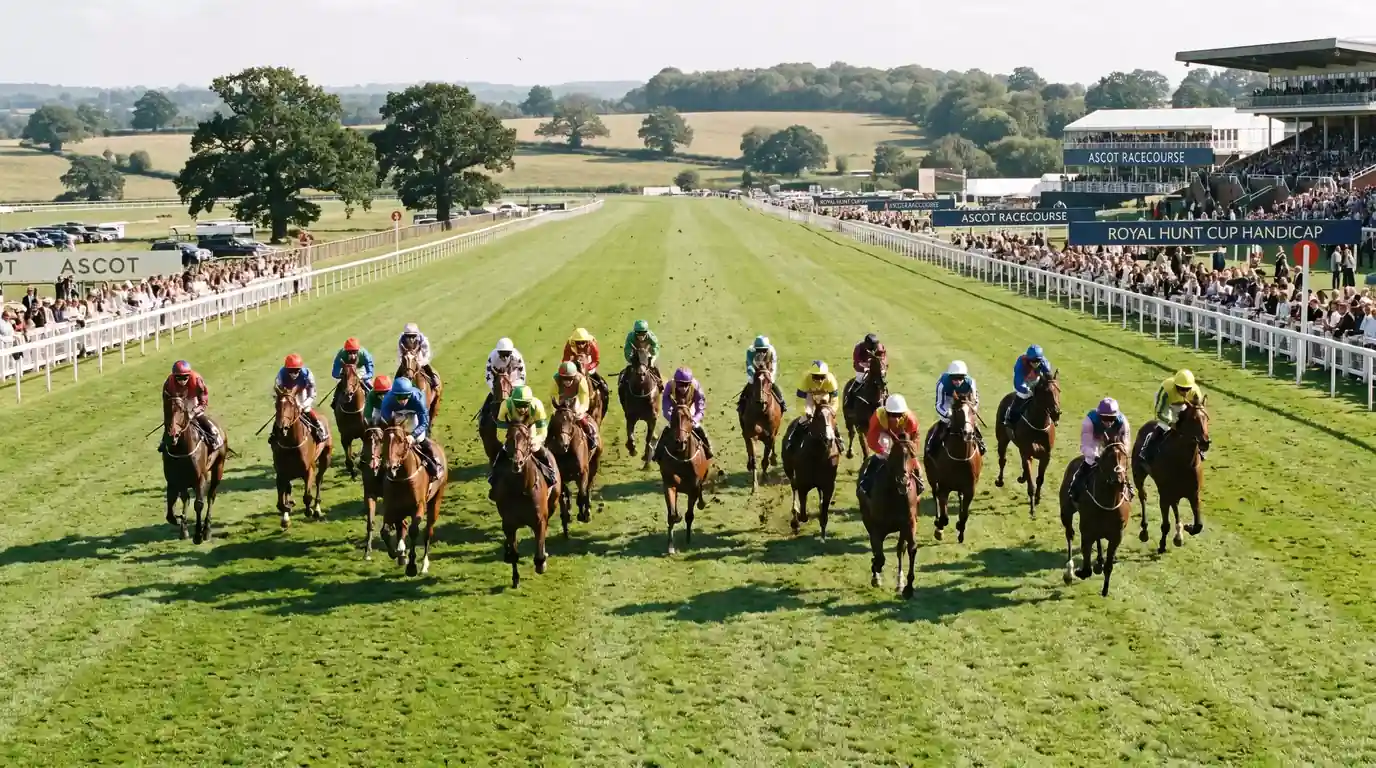
Table of Contents
- The Handicap Advantage: More Runners, More Places, More Chances
- Reading the Handicap: Weight, Class, and Each-Way Angles
- Four Places at 1/4: the Maths Behind Big-Field Each-Way Returns
- Top online casinos in the UK
- Heritage Handicaps and Festival Handicaps: Where the Each-Way Money Concentrates
- Trap Handicaps: When Big Fields Deceive the Each-Way Punter
- Each-Way Handicap Questions Answered
The Handicap Advantage: More Runners, More Places, More Chances
My most profitable each-way month ever came from seven bets — all on Saturday handicaps with sixteen or more runners. Five of the seven placed without winning. One won. One ran nowhere. The total profit came almost entirely from the place portions, which collected at 1/4 of prices between 10/1 and 25/1 with four places paid. That month crystallised something I had suspected for years: handicaps are the natural habitat of the each-way bettor.
The mechanics explain why. Handicap races carry the largest fields in British racing, and large fields trigger the most generous place terms. A race with sixteen or more runners pays four places at 1/4 odds. A race with eight to fifteen runners pays three places. Five to seven runners gets you two. Those extra places are not marginal — they reshape the entire probability structure of the bet. In a twenty-runner handicap, finishing in the top four means your horse outran 80% of the field. That is a much more achievable threshold than finishing first.
UK racing’s prize money hit a record 194.7 million pounds in 2025 — a 3.5% increase — as noted by RCA’s Kevin Walsh, and the competitive handicap programme is a significant driver of both field sizes and betting turnover. The bigger the prize, the larger the field, and the more generous the each-way terms.
Reading the Handicap: Weight, Class, and Each-Way Angles
Not all handicaps are equal, and not all runners in a handicap deserve your each-way stake. The structure of the race — weights, class, ground, draw — filters the field into serious contenders and expensive passengers. Understanding that filter is what separates profitable each-way bettors from those who scatter money across every big field they see.
Weight is the great leveller. The handicapper assigns a rating to each horse based on its recent form, and that rating translates to a weight carried in the race. A well-handicapped horse — one whose ability slightly exceeds its current mark — carries less weight relative to its true capability. These horses are the bread and butter of each-way handicap betting because they are more likely to outperform their odds.
Recent course and distance form is the next filter. A horse that has placed twice at Ascot over a mile and a half on good ground, now running at Ascot over a mile and a half on good ground, is repeating a pattern it has already proved capable of. Handicap punters who ignore proven course form in favour of exotic speed figures or sectional data are often overthinking what the formbook is already telling them.
The draw matters in flat handicaps, particularly at courses with pronounced biases. Chester’s tight turns favour low draws. Beverley’s undulations and camber create position-dependent advantages at certain distances. A horse drawn wide in a sprint handicap at Ayr faces a different race to one drawn against the rail. Each-way bettors who overlook the draw are placing blind bets on half the field.
Four Places at 1/4: the Maths Behind Big-Field Each-Way Returns
The jump from three places to four changes the maths of each-way betting in a way that many punters underestimate. Around 75% of all bets on the Grand National are each-way, per grandnational.org.uk figures, and the National pays four places at 1/4 odds on a field of forty runners. That is the extreme end of the spectrum, but any race with sixteen or more runners triggers the same four-place, 1/4-odds terms.
On a horse priced at 16/1, 1/4 place odds give you 4/1 on the place portion. If the horse finishes second, third, or fourth, you collect 4/1 on your place stake. In a twenty-runner race, finishing in the top four represents a roughly 20% probability if all horses were equally likely to finish in any position — which they are not, but it is a useful baseline. A 4/1 payout on a 20% chance is exactly break-even. On a well-handicapped horse whose true place probability is 30% or higher, 4/1 becomes a genuine value proposition.
The calculation I run for every handicap each-way bet is simple: estimate the horse’s probability of finishing in the places, convert the place odds to implied probability, and compare. If my estimated place probability exceeds the implied probability of the place odds by at least ten percentage points, the bet meets my threshold. Below that margin, the expected value is too thin to justify the risk.
Top online casinos in the UK
- WinBeastBonus: €5000 + 500 FS + €650 Freebet · Payout speed: 1-3 business days
- NightWinBonus: £900 + 400 free spins · Payout speed: 1-3 business days
- ZombillionBonus: Welcome Pack 250% up to £4000 + 200 FS · Payout speed: 1-3 business days
- AmunbetBonus: Join now and get 450% up to 2,700 GBP + 450 FS · Payout speed: 1-3 business days
- JetsetspinsBonus: 200% Bonus + 100 Free Spins + Free Royal Wheel · Payout speed: 1-3 business days
- BritsinoBonus: Welcome Package – Get your £2,200 + 2,000 FS · Payout speed: 1-3 business days
Heritage Handicaps and Festival Handicaps: Where the Each-Way Money Concentrates
British racing’s marquee handicaps — the Cambridgeshire, the Cesarewitch, the Coral Cup, the County Hurdle — attract the deepest each-way interest because they combine massive fields with competitive betting markets. Bookmaker gross profits in early 2025 ran well above recent norms, with HBLB’s Said Delmonte noting that the Cheltenham Festival results were particularly bookmaker-friendly. That means the public lost more than usual at Cheltenham — but it also means the place payouts for those who did find the frame were collecting against a market that overestimated the favourites.
Festival handicaps at Cheltenham are unique. The fields are large, the quality is high, and the form is concentrated around a small window of peak fitness. Trainers target these races months in advance, and the handicap marks often reflect a deliberate campaign of running below the horse’s best to secure an attractive weight. For each-way bettors, this creates a paradox: the form is harder to read because horses have been deliberately hidden, but the rewards for spotting a well-handicapped runner are amplified by generous place terms and big-field odds.
I approach festival handicaps differently from regular Saturday races. The selection process is slower, more form-intensive, and weighted toward trainers with a track record of each-way strategy at the specific meeting. A trainer who has placed four horses in the last three Coral Cups is telling you something about their approach to the race. Following that pattern is not a guarantee, but it narrows the field more efficiently than raw form analysis alone.
Trap Handicaps: When Big Fields Deceive the Each-Way Punter
Not every large-field handicap is an each-way goldmine. Some are traps — races where the conditions create false confidence in the each-way structure.
All-weather handicaps at Wolverhampton on a Monday night might have sixteen runners and four places, but the quality is low, the form is unreliable, and the prices do not compensate for the randomness. A 10/1 shot in a low-grade all-weather handicap is not the same value proposition as a 10/1 shot in the Ebor at York. The place odds are identical, but the underlying probability assessments are built on different foundations.
Split handicaps — where the original entry is divided into two races to accommodate the number of declarations — can also mislead. The split often separates horses by rating band, creating a top half and a bottom half. The bottom-half split might still attract sixteen runners, triggering four-place terms, but the competitiveness is concentrated in a narrow band of ability where separation is minimal. Dead heats and photo-finish place disputes are more common in tightly-banded splits, which introduces dead-heat risk to your place payouts.
The filter is always the same: does the form justify the each-way bet at the available price? A big field is a necessary condition for generous place terms, but it is not a sufficient condition for a value bet. The horse, the weight, the ground, the draw, and the price all need to align before the handicap structure delivers its advantage.
Each-Way Handicap Questions Answered
How many places are paid in a handicap with exactly sixteen runners?
Sixteen runners triggers four places at 1/4 the odds. This is the standard industry term for handicaps with sixteen or more runners. If withdrawals reduce the field to fifteen before the off, place terms drop to three places at 1/5 the odds — a significant change that punters should monitor.
Are each-way bets more profitable on handicaps than non-handicap races?
In general, handicaps offer more favourable each-way conditions because they attract bigger fields, which trigger more place positions. The competitive nature of handicaps also produces less predictable results, which means outsiders place more frequently than in non-handicap races where the class structure more reliably separates the field. However, profitability depends on the specific selections and prices, not just the race type.
The full picture is in our guide to UK place and each-way betting.
The terms that make them worth it: UK place terms.
Written by the editors at Horse Racing Show bet.