Show Bet vs Place Bet: Why American and British Horse Racing Use Different Systems
Best Horse Racing Betting Sites – Bet on Horse Racing in 2026
 Available in US
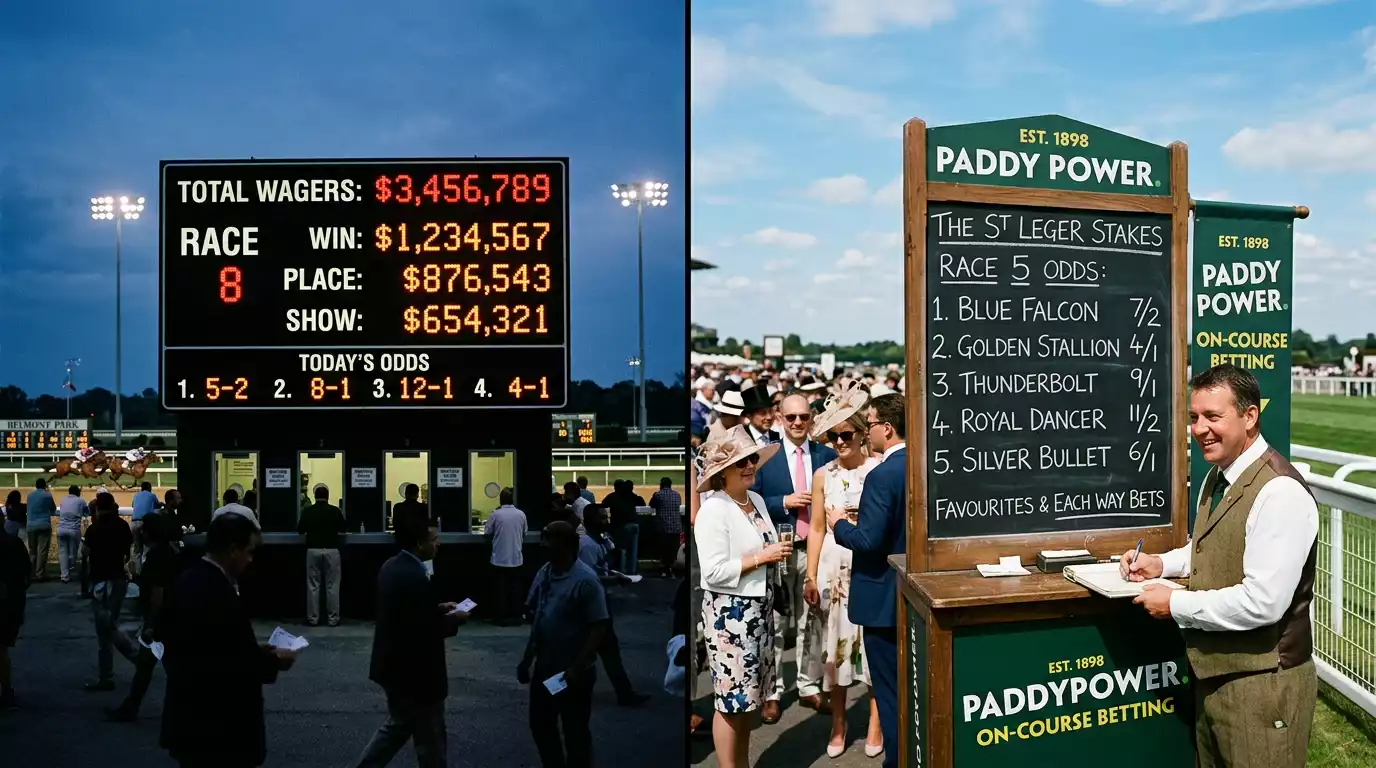
Table of Contents
- Same Sport, Different Bet: How the Atlantic Split Horse Racing Wagers
- How a US Show Bet Works: Pool, Takeout, and Minimum Payouts
- How a UK Place Bet Works: Fixed Odds, Declared Fractions, and Bookmaker Margins
- Payout Head-to-Head: the Same Horse in Both Systems
- Where Each-Way Betting Fills the Gap Left by the Absent Show Market
- Edge and Transparency: Which System Gives the Bettor More Control
- Show Bet vs Place Bet Questions Answered
Same Sport, Different Bet: How the Atlantic Split Horse Racing Wagers
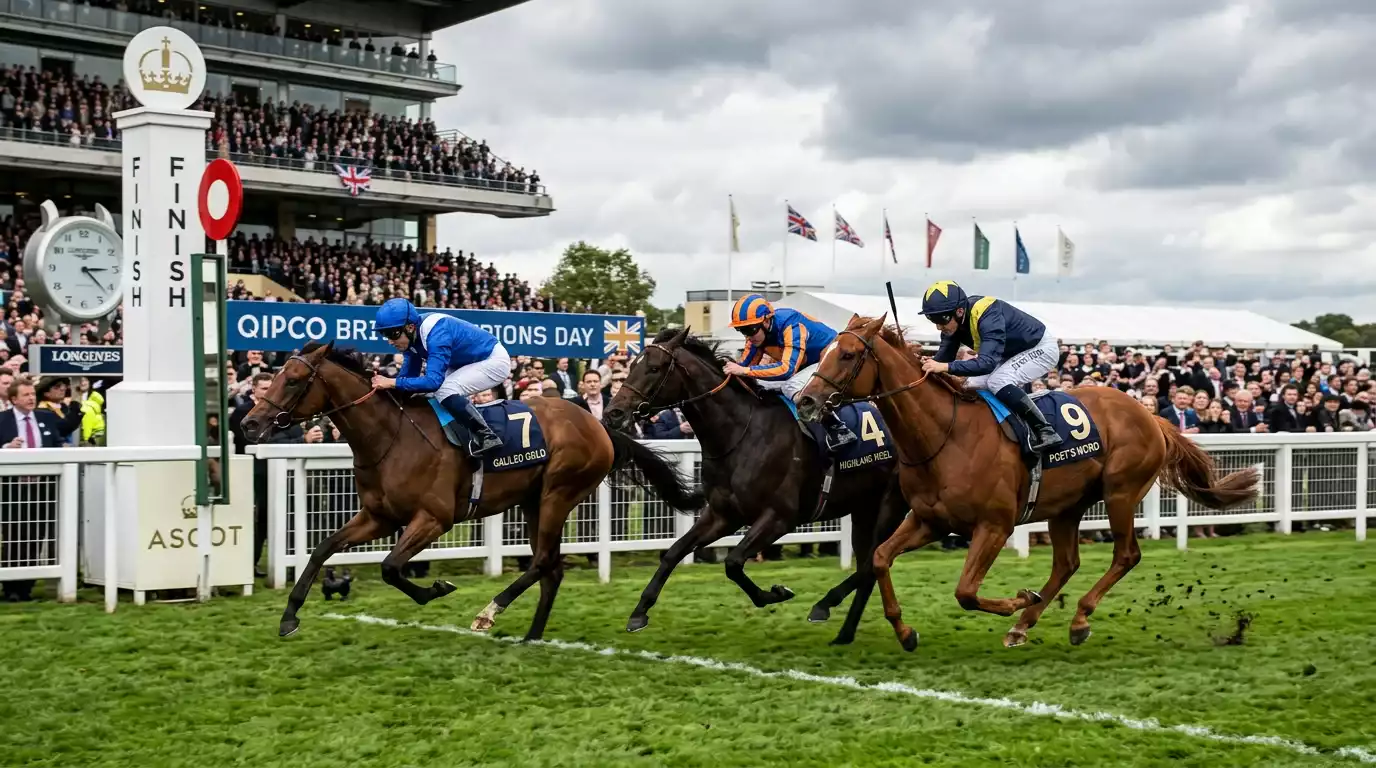
A few years ago, an American visitor at Newmarket asked me where to place a show bet. I pointed him to the each-way option on the betting board and he stared at it like I’d handed him a menu in a foreign language. In a sense, I had. The words were English, the sport was identical, but the betting mechanics were built on completely different foundations.
That conversation crystallised something I’d observed for years: the US show bet and the UK place bet serve the same basic purpose, rewarding punters who pick a horse that finishes near the top without necessarily winning, but the machinery behind them is almost entirely different. One runs on a communal pool where your payout depends on everyone else’s money. The other runs on fixed odds published by a bookmaker before the race starts. One is a feature of pari-mutuel tracks that date back to nineteenth-century France. The other is a product of British bookmaking culture that predates formal regulation.
The pari-mutuel model accounts for only about 5% of total UK horse racing betting turnover, per Gambling Commission data, while fixed-odds betting dominates the remaining 95%. In the US, the balance is reversed, pari-mutuel is the standard at every major track. That structural divide explains why a show bet, as Americans understand it, simply does not exist as a standalone product at UK bookmakers. Wikipedia’s entry on betting in horse racing puts it plainly: a show bet in the North American sense does not exist in the UK.
This article maps both systems side by side, the mechanics, the payouts, and the transparency, so you understand not just what each bet does, but why the two countries arrived at such different solutions to the same problem.
How a US Show Bet Works: Pool, Takeout, and Minimum Payouts
Imagine a giant jar sitting behind the counter at a US racetrack. Everyone who wants to bet on a horse finishing in the top three drops their money into that jar. No individual odds are published; the jar just grows. That’s the show pool, and it determines every show payout at the track.
Before any money is paid to winners, the track takes its cut. This is the takeout rate, and for show pools it typically runs around 15-20% depending on the state. A 100,000-pound show pool with an 18% takeout leaves 82,000 pounds to be divided among the winning bettors, everyone who backed a horse that finished first, second, or third.
The division works in three stages. First, the net pool (after takeout) is split into three equal portions, one for each of the three show positions. Second, within each portion, the money bet on the specific qualifying horse is returned to those bettors as their base stake. Third, the remaining profit in that slice is distributed proportionally among those bettors based on how much each one wagered.
Here’s a concrete example. Suppose the net show pool is 90,000 pounds, split into three portions of 30,000 each. The horse that finished third had 10,000 pounds bet on it in the show pool. That 10,000 is returned to its bettors. The remaining 20,000 in that portion is profit, divided proportionally among them. A bettor who wagered 100 pounds on that horse, representing 1% of the 10,000, receives 1% of the 20,000 profit, or 200 pounds, plus the original 100 back. Total return: 300 pounds on a 100-pound bet.
The critical feature of this system is that you don’t know your payout until the pool closes. If a heavily-backed favourite finishes third, its show portion must be split among a very large number of bettors, compressing individual returns. A 1/5 favourite finishing in the show might return barely more than your original stake. Conversely, a longshot finishing third in the show can produce surprisingly large returns because fewer people backed it.
US tracks guarantee a minimum show payout, typically 10 pence on the pound (a 2.10 return on a 2.00 minimum bet). This floor means show payouts on heavy favourites can, in extreme cases, return just 5% profit. It’s a safety net for the pool’s integrity, not a generous return for the bettor.
How a UK Place Bet Works: Fixed Odds, Declared Fractions, and Bookmaker Margins
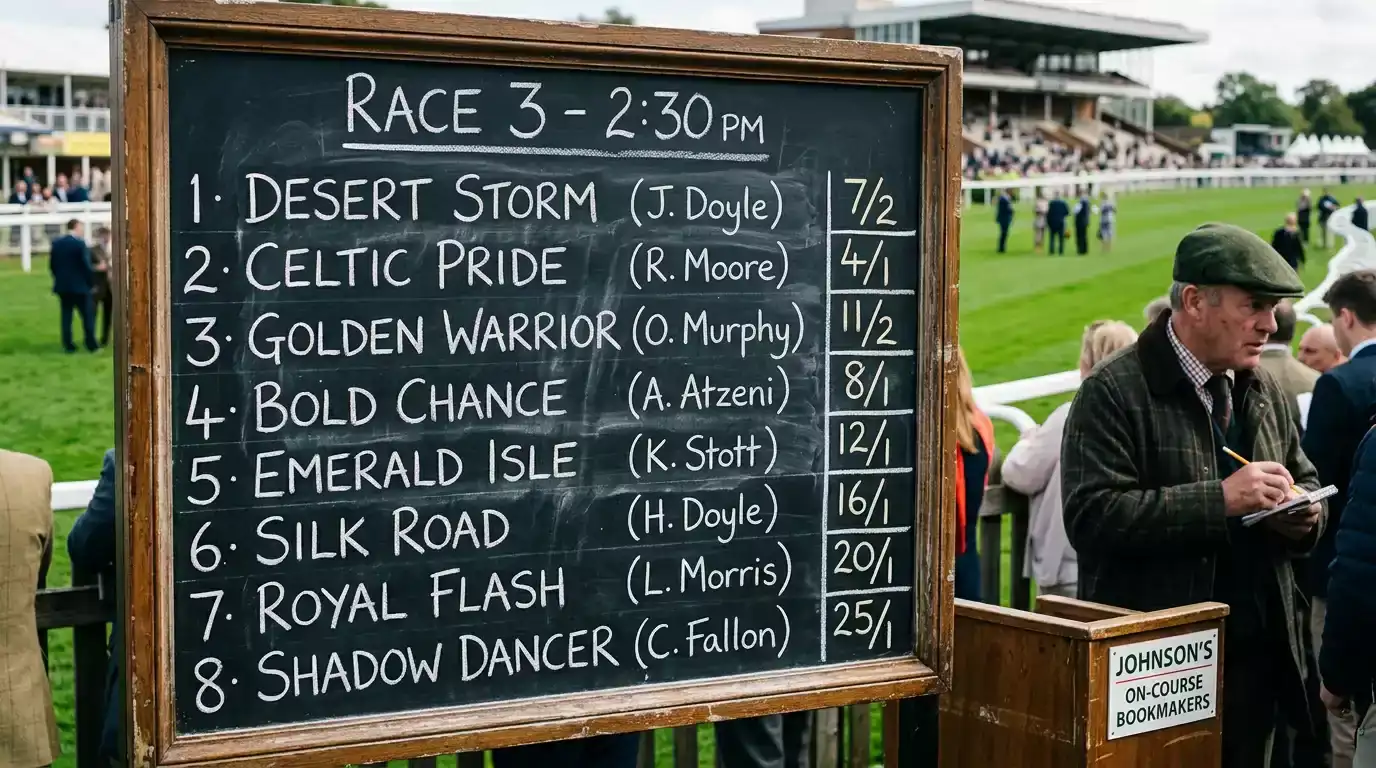
Walk into any UK betting shop or open any UK operator’s app and you’ll find something the US track doesn’t offer: a price. A fixed, declared price that tells you exactly what your horse will pay if it finishes in the places. No communal pool, no waiting for the final calculation, no dependency on what other punters did with their money.
The UK place bet operates on fixed odds set by the bookmaker. When you back a horse at 10/1 each way with 1/4 place terms, the place part of your bet settles at 10/4, or 5/2, regardless of how much money flows in after you. The price is locked. This is the defining difference between the two systems: the UK bettor trades with a bookmaker who takes the opposite side of the wager, while the US bettor contributes to a pool that distributes money among all qualifying ticket-holders.
The bookmaker’s margin sits inside the odds. A 10/1 shot in a twelve-runner race has an implied win probability of roughly 9%. The bookmaker builds an overround across the full field, the sum of all implied probabilities exceeds 100%, and the excess is the operator’s theoretical margin. The place fraction (1/4 or 1/5) introduces a second layer of margin, because the implied place probability embedded in 10/4 doesn’t necessarily reflect the horse’s true chance of finishing in the frame.
Remote horse racing betting generates hundreds of millions of pounds in gross gambling yield each year in the UK, per the Gambling Commission, nearly all of it through fixed-odds markets. The pari-mutuel Tote exists in the UK but handles a fraction of that volume. Fixed odds dominate because they offer certainty: you know what you’ll be paid before the race starts. For place bettors, that certainty means you can calculate your exact return, compare it across operators, and make an informed decision about whether the terms offer value. In the US pool system, that comparison is impossible until the pool closes.
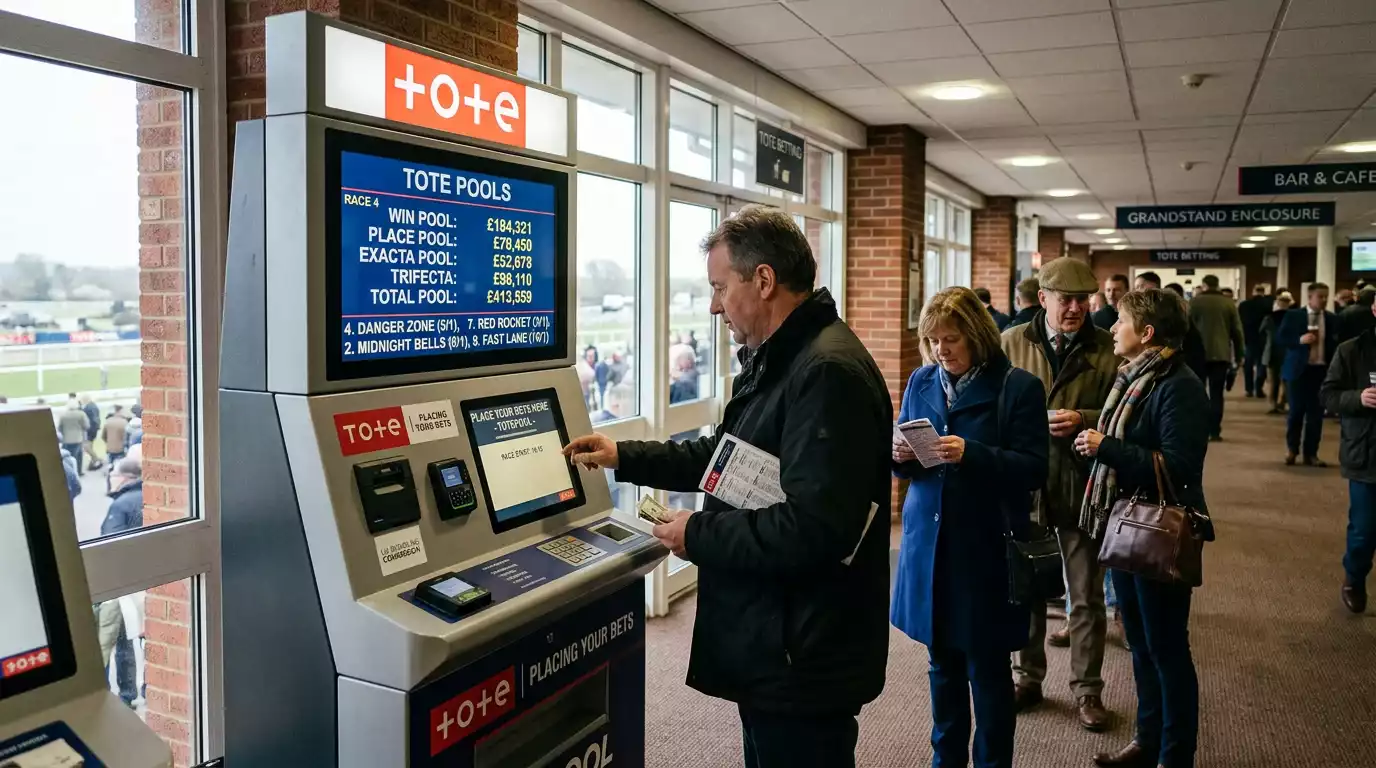
The trade-off is transparency versus collective determination. UK bookmakers set the odds, which means the bettor sees the price but doesn’t control it — and the bookmaker’s margin is baked in, not disclosed. US pools show the total money wagered (it’s displayed on the tote board at the track), which gives a form of transparency, but the individual bettor’s return remains uncertain until settlement.
Payout Head-to-Head: the Same Horse in Both Systems
Let’s take the same horse and run it through both systems to see what comes out the other side.
Horse: 10/1 in the UK fixed-odds market, equivalent to roughly 11.00 in decimal odds. The horse finishes third in a twelve-runner race. In the UK, with 1/4 place terms, a five-pound each-way bet returns 17.50 from the place part (5 x 5/2 = 12.50 profit + 5 stake) and nothing from the win part. Total return: 17.50 on a 10-pound outlay. Net profit: 7.50.
In the US, the same horse finishing third triggers a show payout from the pool. If the show pool is relatively small and few people backed this horse, the payout might be generous, a five-pound show bet could return 15, 20, or even 30 pounds. But if the horse attracted significant show action (perhaps it was considered a “safe” each-way type), the return could compress to seven or eight pounds. You don’t know until the tote board posts the result.
That uncertainty is the core difference in punter experience. At Entain Group’s reported figures, 82% of cash bets on the Grand National are five pounds or less. Those small-stake casual punters are making a decision based on known terms — they can see exactly what their horse will return if it places. In the US system, the same casual bettor drops a five-pound note into the show pool and hopes the maths works out. Neither system is objectively better, but they demand different mindsets.
Where the comparison gets interesting is at the extremes. On heavy favourites, the UK fixed-odds system tends to produce more predictable but modest place returns, a 2/1 shot at 1/4 terms gives place odds of 1/2, which is tight but known. In the US pool, a heavy favourite finishing in the show can produce the minimum payout (essentially breaking even), because the pool is swamped with money on that horse. The pool punishes popularity more severely than fixed odds do.
On longshots, the reverse can apply. A 33/1 outsider placing in the UK returns generous fixed-odds — 33/4 or 33/5 depending on terms. In a US show pool, that same longshot might produce an even larger payout because so little money was bet on it, and the pool distributes its profit share among a tiny number of winning tickets. The variability cuts both ways, and it’s that variability, the absence of a fixed price — that makes the US system simultaneously more exciting and less controllable.
Where Each-Way Betting Fills the Gap Left by the Absent Show Market
If the UK doesn’t have a standalone show bet, how do British punters achieve the same outcome, backing a horse to finish in the top three (or four, or more) without requiring it to win? The answer is the each-way bet, and it’s not a perfect equivalent.
An each-way bet is two bets in one: a win part at full odds and a place part at a fraction of the odds. The place part functions similarly to a US show bet in that it pays for a top-three finish (or top-two, or top-four, depending on field size and race type). But unlike a US show bet, it’s bundled with the win part — you can’t strip it out at a standard UK bookmaker. The total outlay is double the unit stake, because you’re paying for both halves.
Entain’s Simon Clare, the group’s PR Director, once made the point that racing needs big names to draw attention and betting volume. Stars like Constitution Hill and Galopin Des Champs are household names, per Clare’s own words. Those stars generate the kind of betting interest that makes each-way markets competitive, bookmakers fight for volume on high-profile races, which pushes place terms in the punter’s favour.
There is a partial workaround for punters who want place-only exposure without the win part. Some UK bookmakers offer standalone place markets on selected races, and the UK Tote runs its own place pool alongside the fixed-odds market. Exchange platforms like Betfair also offer place markets where punters can back a horse to place at odds set by the market itself. These options function more closely to the US show concept — a single bet on a place finish, without the attached win component, but they’re not available on every race and they don’t replicate the pari-mutuel pool structure.
The gap between the US show bet and the UK each-way bet is structural, not accidental. The US system evolved from a single pool model where win, place, and show are three separate betting products. The UK system evolved from a bookmaker model where the each-way bet bundles two products into one transaction. Both solve the same problem — giving punters a route to profit without requiring outright victory, but they solve it through fundamentally different commercial architectures.
The practical consequence for British punters searching “show bet” online: the bet they’re looking for doesn’t exist under that name, but the function it serves — placing money on a horse to finish near the top, is available through multiple channels in UK racing. Each-way is the default, place-only is the alternative, and exchange place markets offer the most granular control. Knowing which channel suits which situation is the real skill.
Edge and Transparency: Which System Gives the Bettor More Control
Which system favours the punter? I’ve turned this question over for years, and the honest answer depends on what kind of edge you’re looking for.
Fixed odds give you control over price. If a UK bookmaker offers 10/1 on your horse with 1/4 place terms, you can calculate the exact return, compare it against other operators, and take the best available price before the race. That comparison is a genuine source of edge — it costs nothing and consistently captures small but compounding advantages. The UK remote betting market generated 2.6 billion pounds in total GGY across all sports in the same period, per the Gambling Commission, and that enormous volume supports a competitive marketplace where price differences between operators are common.
Pari-mutuel pools give you potential upside on information asymmetry. If you identify a horse that the crowd has overlooked in the show pool, a legitimate contender trading at minimal show interest — the pool will pay generously when that horse finishes in a qualifying position. The edge comes from being smarter than the crowd, not from shopping across operators. But the crowd includes professional handicappers, syndicates, and algorithm-driven pools, which compresses the opportunities for casual bettors.
Transparency is another axis of comparison. US tote boards display real-time money in each pool, giving you a rough idea of what the payout will be if your horse qualifies. That information is public, dynamic, and useful for last-minute decisions. UK fixed odds are published but the bookmaker’s margin is opaque, you see the price, not the theoretical edge the bookmaker has baked into it. Exchange markets offer a middle ground: the odds are set by other punters, commissions are stated, and the implied margins are calculable.
My conclusion, drawn from nearly a decade in this space: the UK fixed-odds system gives the disciplined punter more consistent tools for building an edge. Price comparison, fraction awareness, and promotional exploitation are all under the bettor’s control. The US pool system rewards a different kind of skill — crowd-reading, timing, and contrarian thinking, but its returns are inherently less predictable.
Neither system eliminates the bookmaker’s or the track’s advantage. Both are designed to make money for the operator over time. The question is which set of tools you prefer for tilting the odds — slightly, incrementally, in your direction.
Show Bet vs Place Bet Questions Answered
Can you place a show bet with a UK bookmaker?
No. The show bet as a standalone product — a single wager on a horse finishing in the top three — does not exist in UK fixed-odds betting. The closest equivalent is the place part of an each-way bet, but that comes bundled with a win part, doubling your stake. For standalone place exposure, look at place-only markets offered by some bookmakers on selected races, the Tote place pool, or exchange place markets.
Why does the US use pari-mutuel pools while the UK uses fixed odds for place bets?
The divergence is historical. France developed the pari-mutuel system in the 1860s, and the US adopted it as the standard model for racetrack betting. The UK evolved a bookmaker-driven market where individuals set odds and take the opposite side of each wager. Both systems regulate gambling and fund racing, but through different structures. The UK’s fixed-odds model allows price comparison before a bet is placed, while the US pool model determines payouts collectively after the race.
Is a US show bet the same as the place part of a UK each-way bet?
Similar in purpose but not identical in structure. Both pay when a horse finishes in a qualifying position. However, the US show bet is a standalone wager settled through a pari-mutuel pool, while the UK place part is one half of a two-part bet settled at fixed odds. The payout mechanics, the pricing model, and the operator’s role are all different. The UK place part gives certainty of price; the US show bet gives variability based on pool dynamics.
How does the takeout rate on a US show pool compare to UK bookmaker margins?
US show pool takeout rates typically range from 15% to 20%, depending on the state and the track. UK bookmaker margins on place bets are harder to calculate directly because they are embedded in the odds and the place fraction, but industry estimates put the theoretical overround on a typical UK horse racing market at roughly 15-25%. The mechanisms differ — takeout is a flat percentage removed from the pool, while bookmaker margin varies by race and is distributed unevenly across the field — but the total cost to the bettor is broadly comparable.
The full picture is in our guide to UK place and each-way betting.
The American three-tier system: win, place, show.
Prepared by the Horse Racing Show bet editorial staff.