Each-Way Betting Explained: How the Two-Part Wager Works in UK Horse Racing
Best Horse Racing Betting Sites – Bet on Horse Racing in 2026
 Available in US
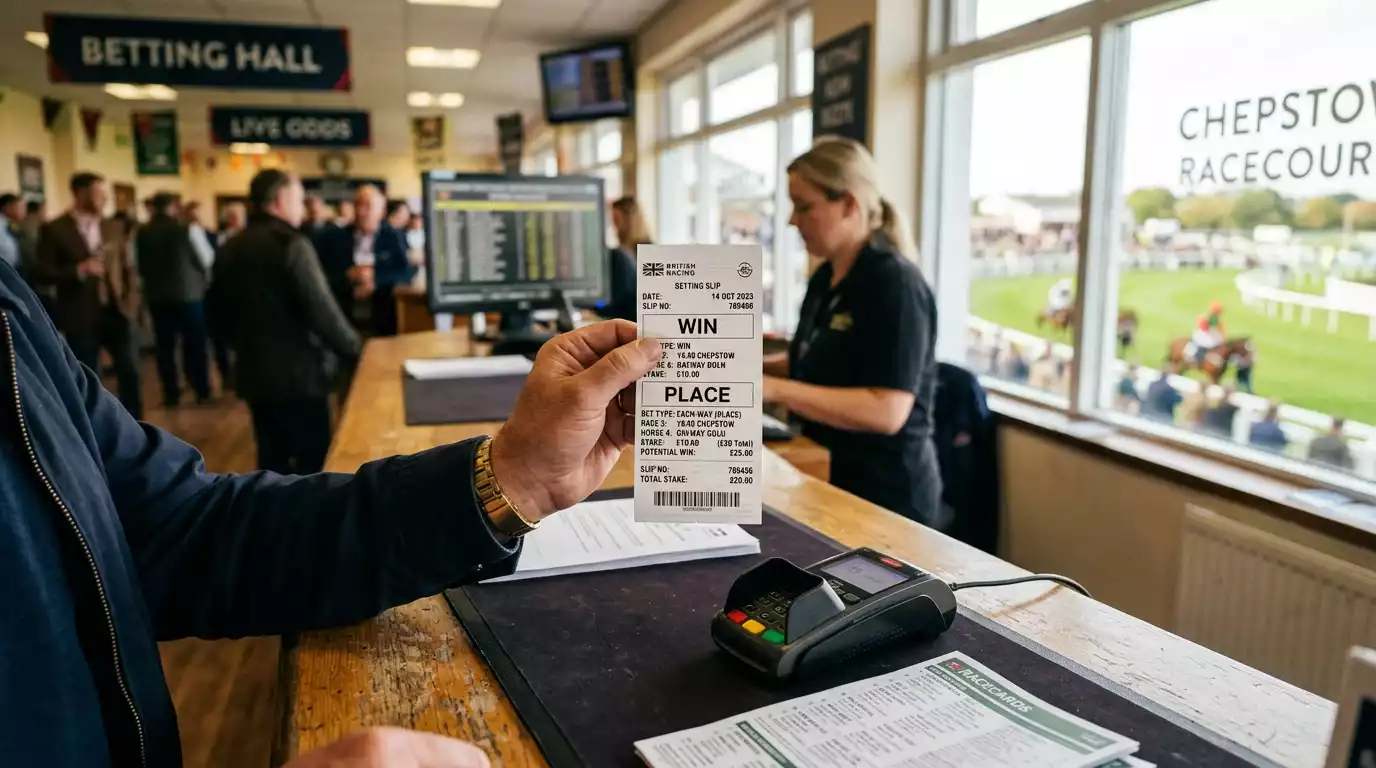
Table of Contents
- The Split Stake That Defines British Racing Bets
- Anatomy of an Each-Way Bet: Win Part and Place Part
- How Each-Way Payouts Are Calculated: a Worked Example From Stake to Profit
- Each-Way Multiples at a Glance: Why the Parallel Accumulator Matters
- When the Split Stake Earns More Than a Win-Only Wager
- Five Each-Way Mistakes That Drain Your Betting Bank
- Each-Way Bets in the UK Market: Participation and Turnover
- Each-Way Betting Questions Answered
The Split Stake That Defines British Racing Bets
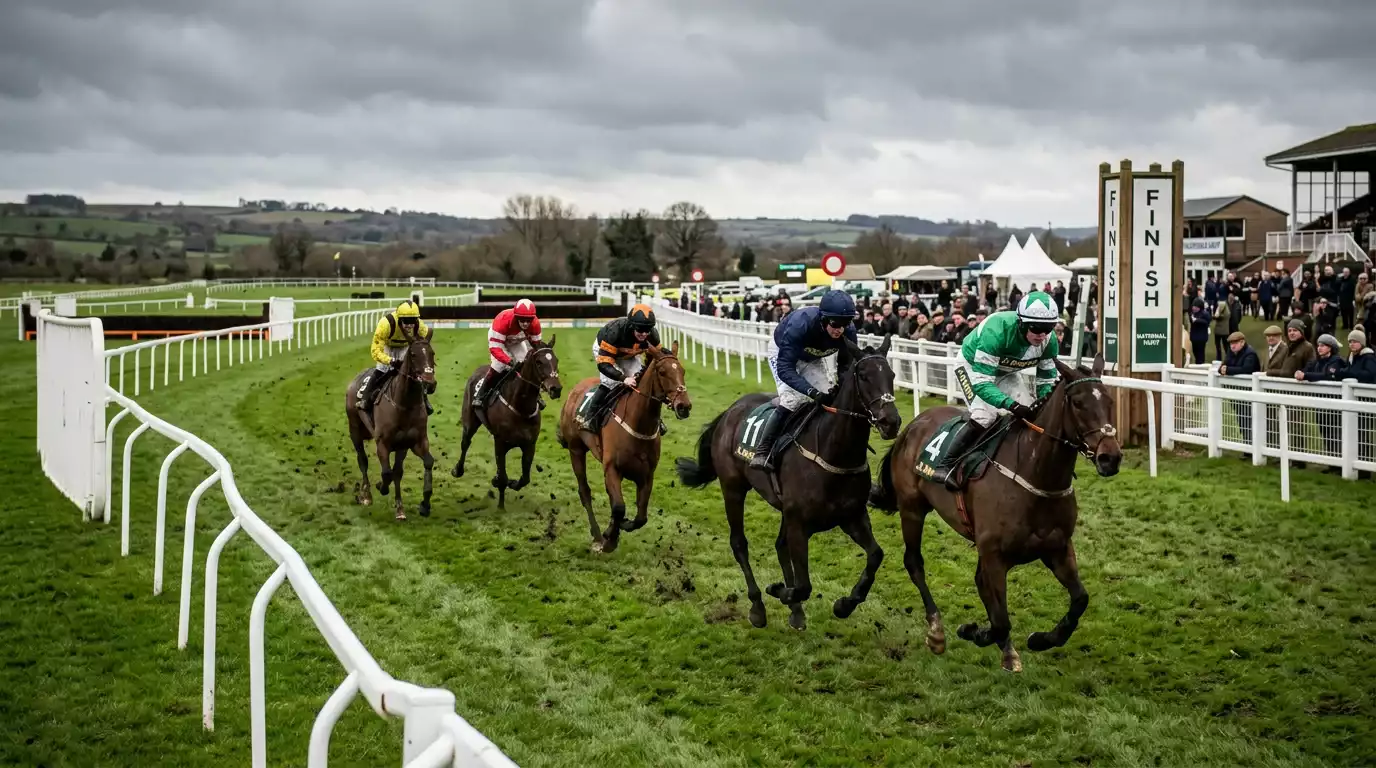
I watched a first-time racegoer at Cheltenham hand his betting slip back to the counter three years ago, confused because he thought his horse had lost. It finished third. His each-way bet had paid out; he just didn’t know it. That moment captures the entire problem with how each-way betting is taught: badly, or not at all.
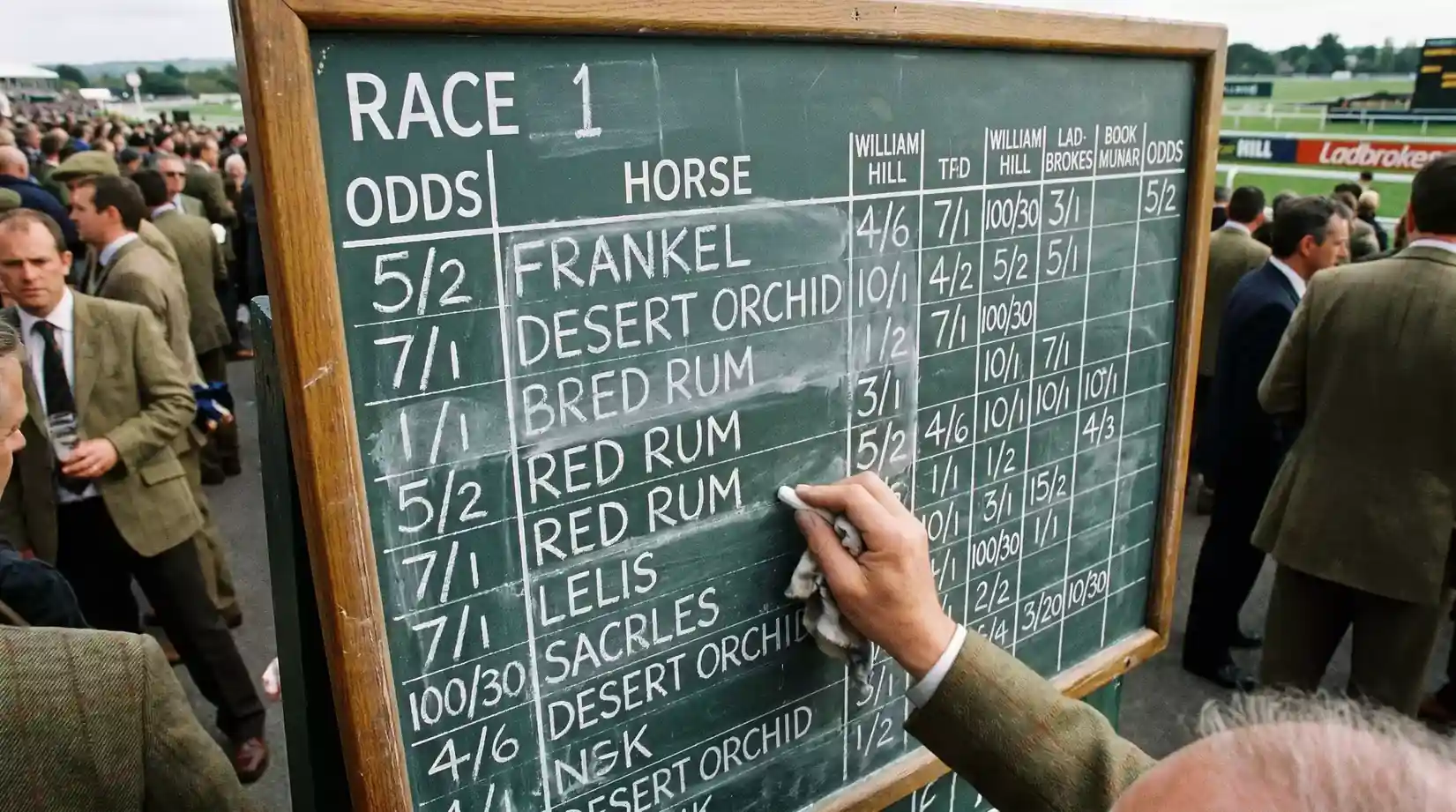
The each-way bet is the single most popular wager type in British horse racing. During the Grand National, roughly 75% of all bets placed are each-way, per grandnational.org.uk. That figure alone should tell you something about the structure’s appeal: it softens the all-or-nothing brutality of a win bet by splitting your money into two separate stakes, each with its own settlement conditions. One half backs your horse to win outright. The other half backs your horse merely to finish in the places, which in UK racing typically means second, third, or, in larger-field handicaps, fourth or beyond.
Yet for all its popularity, each-way betting is routinely misunderstood. Punters confuse the place fraction with the number of places paid. Others assume the wager costs the same as a win single. Some don’t realise that the place part of their bet runs at reduced odds, a fraction of the win price, not the full win price. These misunderstandings cost real money, race after race, meeting after meeting.
I have spent nine years analysing place-market mechanics across UK racing, and each-way value is the thread running through almost every conversation I have with serious punters. This piece strips the bet back to its two component parts, walks through the maths with a concrete example, and covers the situations where splitting your stake genuinely earns its keep, and where it quietly bleeds your bank dry.
Anatomy of an Each-Way Bet: Win Part and Place Part
Picture your betting slip as two separate tickets stapled together. That’s what the wager actually is, not one bet, but two distinct bets of equal stake running on the same horse in the same race.
The first ticket is the win part. It behaves identically to a standard win single. If your horse crosses the line first, this part pays at full advertised odds. If the horse finishes anywhere else, second, third, last, this part loses. Nothing complicated here.
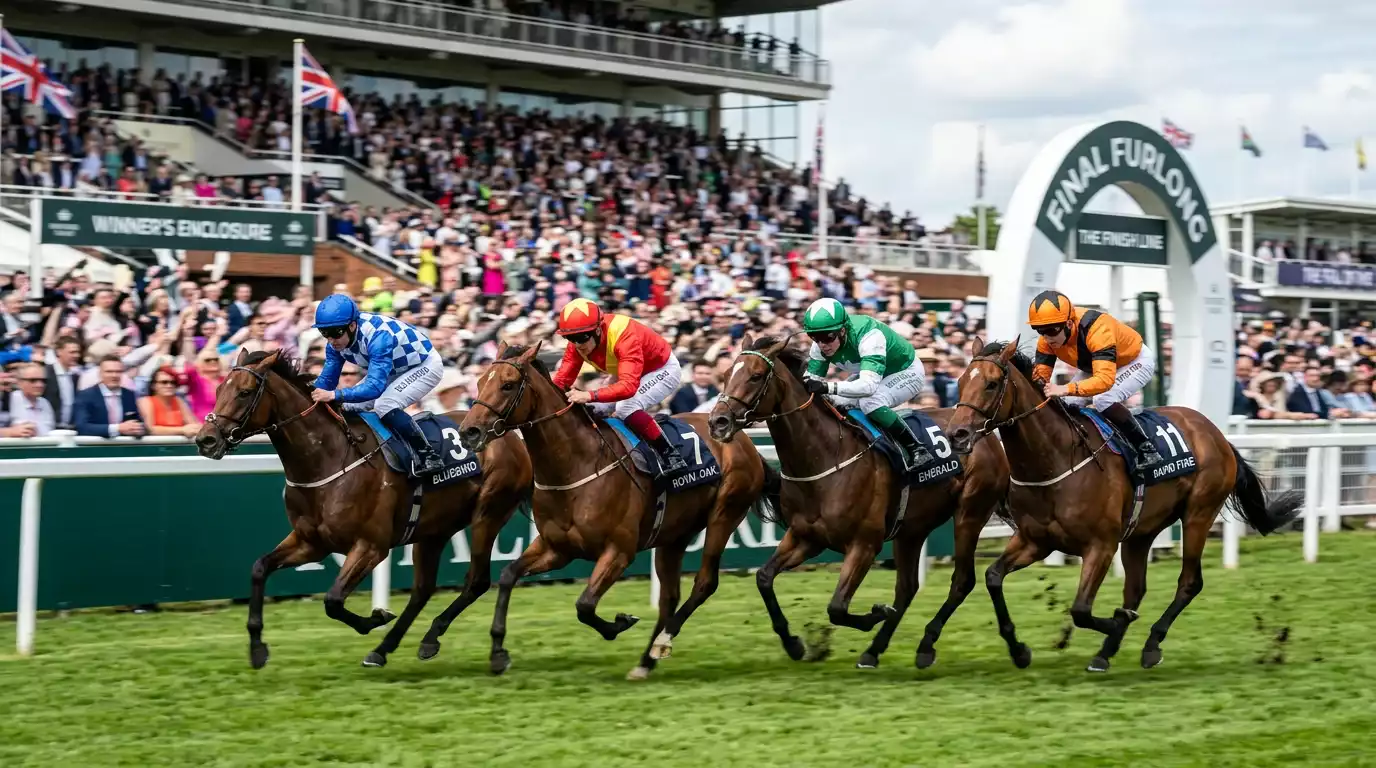
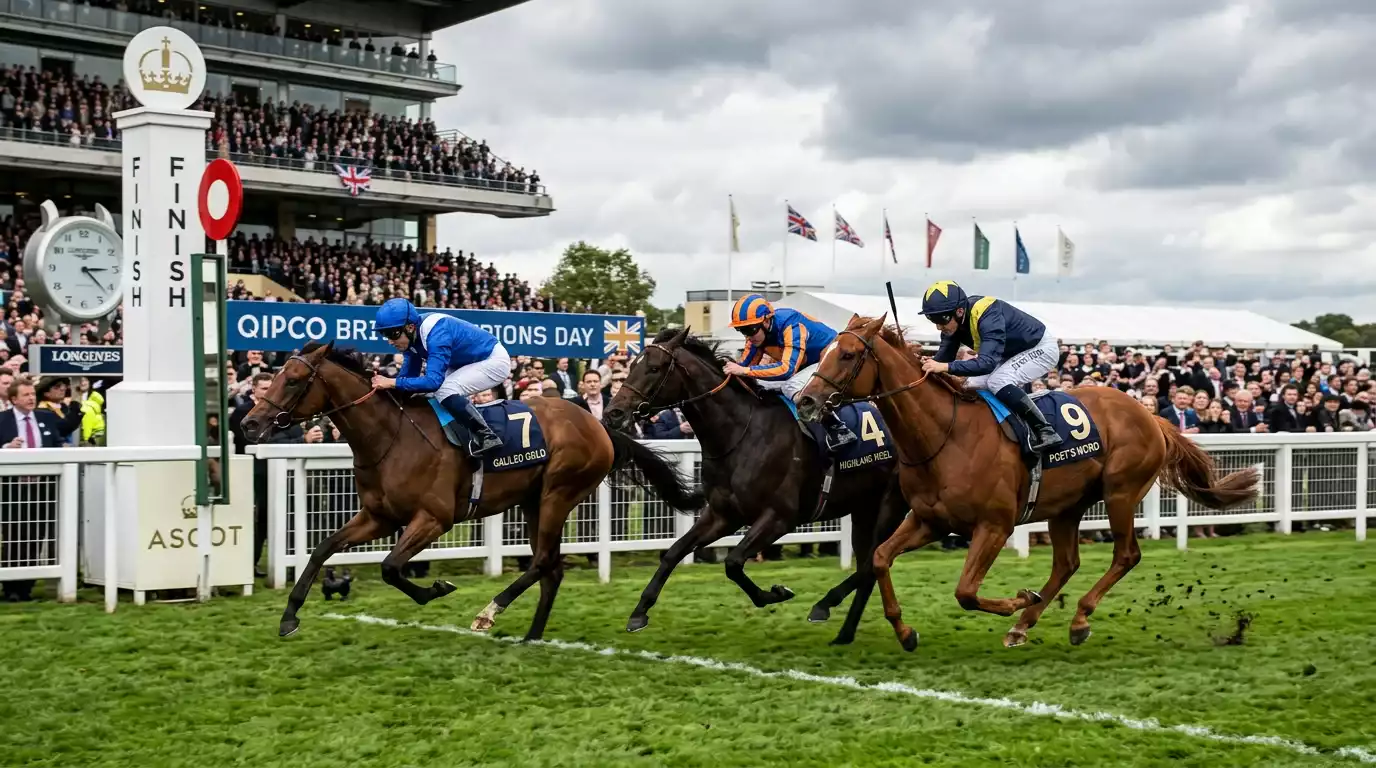
The second ticket is the place part. This is where each-way betting earns its reputation as a safety net. The place part triggers if your horse finishes within the designated number of places for that race. In a standard non-handicap with eight or more runners, the bookmaker typically pays three places. In a handicap with sixteen or more runners, four places are paid. Smaller fields reduce the number further, five to seven runners usually means two places, and in a race with four or fewer runners, there may be no place betting at all.
The critical detail that trips up newer punters: the place part does not pay at full odds. It pays at a fraction of the win odds. The two standard fractions in UK racing are one-quarter (1/4) and one-fifth (1/5). A 10/1 shot with 1/4 place terms gives you place odds of 10/4, which simplifies to 5/2. The same horse at 1/5 terms returns place odds of 10/5, or 2/1. That fraction is set by the bookmaker’s place terms for the race, which depend on field size, race type, and sometimes promotional offers.
Because you are placing two bets, the total outlay is double your unit stake. A “10 pounds each way” bet costs 20 pounds: 10 on win, 10 on place. I cannot count the number of times someone has told me their “tenner each way” only to realise at the counter that they needed 20 pounds in their pocket. It’s a basic point, but it catches people out every single time.
If your horse wins, both parts pay. The win part settles at full odds; the place part settles at the reduced fraction. If the horse places but doesn’t win, only the place part returns anything. If the horse finishes outside the places, both parts lose. That three-outcome structure, full pay, partial pay, total loss, is the entire logic of the wager.
One subtlety worth flagging: the two parts are settled independently. The win part has nothing to do with the place part’s calculation, and vice versa. They share a horse and a race, but their maths are entirely separate. Understanding this independence is essential once you start considering each-way doubles, trebles, and accumulators, because those multiply each part along its own chain.
How Each-Way Payouts Are Calculated: a Worked Example From Stake to Profit
Numbers settle arguments. Let me walk through one complete each-way calculation so you can check any bookmaker’s settlement against your own maths.
Suppose you back a horse at 8/1 in a twelve-runner handicap. The operator’s place terms are 1/4 odds for the first three places. You stake 5 pounds each way, so your total outlay is 10 pounds.
Scenario one: the horse wins. The win part returns 5 pounds multiplied by 8/1, which gives 40 pounds profit plus your 5-pound stake back — 45 pounds from the win part alone. The place part pays at one-quarter of 8/1, which is 8/4, or 2/1. That’s 5 pounds multiplied by 2/1, 10 pounds profit plus the 5-pound stake, totalling 15 pounds from the place part. Combined return: 60 pounds. Subtract your 10-pound total outlay, and the net profit is 50 pounds.
Scenario two: the horse finishes second or third. The win part loses outright — that 5 pounds is gone. The place part pays at 2/1 as before: 15 pounds returned. Against a 10-pound total outlay, your net profit is 5 pounds. Not life-changing, but you’ve rescued value from a horse that didn’t win.
Scenario three: the horse finishes fourth or worse. Both parts lose. You’re down 10 pounds.
Notice something important in that second scenario. At 8/1 with 1/4 terms, a placed horse returns 15 pounds against a 10-pound outlay, a modest profit. But drop the odds to 3/1 and the maths shifts. The place part at 1/4 of 3/1 is 3/4, which means your 5-pound place stake returns 5 times 3/4 = 3.75 profit plus 5 pounds stake back = 8.75 pounds. Against a 10-pound total outlay, a placed-only finish at 3/1 each way actually loses you 1.25 pounds. The place return doesn’t cover the cost of both stakes.
That breakeven threshold — the odds at which a placed-only result returns your total outlay, is one of the most useful numbers in each-way betting. At 1/4 terms with three places, the breakeven sits at approximately 5/1. Below that, placing without winning means a net loss. Above it, placing alone turns a profit. Knowing this single figure sharpens every each-way decision you make. Favourites winning approximately 30-35% of UK races, per Matchbook Insights data, only reinforces the point — a significant majority of the time, even the market leader doesn’t cross the line first, and the place part has to do the heavy lifting.
Each-Way Multiples at a Glance: Why the Parallel Accumulator Matters
An each-way double surprised me the first time I tracked one through to settlement. I’d assumed the two parts would merge into a single chain of multiplied odds. They don’t. They run as two entirely separate accumulators, one for the win parts, one for the place parts — using the same selections but independent calculations.
Say you back two horses each way in a double. Horse A wins at 6/1, horse B places at 10/1 with 1/4 terms. Your win accumulator dies the moment horse B fails to win. But the place accumulator survives, because both horses finished in the places, horse A placed by virtue of winning, horse B placed by finishing in the frame. The place acca multiplies horse A’s place odds (6/4, or 3/2) by horse B’s place odds (10/4, or 5/2). That parallel structure means an each-way accumulator can still produce a return even when none of your selections win, as long as they all place. It also means the total stake doubles with each leg — a four-horse each-way acca at 2 pounds each way costs 4 pounds per leg, multiplied across four selections in two separate chains. The maths compounds fast and so does the risk, which is why I keep a detailed treatment of each-way multiples, staking traps, and realistic expectations in a separate guide to each-way accumulators.
When the Split Stake Earns More Than a Win-Only Wager
Not every race deserves an each-way stake. That’s a sentence I wish someone had said to me in my first year of serious punting, because I wasted a full season automatically ticking the each-way box on every slip.
The clearest case for each-way is a big-field handicap with a selection priced above 5/1 at 1/4 terms. The field size pushes the number of paid places to four, sometimes more with promotional extra-place offers, and the odds are high enough that the place part alone can return a profit. The Grand National is the extreme example, 40 runners, four or more places, and one of the largest single-race betting events in the world. With 82% of in-shop Grand National bets at five pounds or less, according to Entain Group data, most casual punters are already choosing each-way instinctively for that event. They’re right to do so. A 20/1 shot that finishes fourth still hands back a meaningful return.
The case weakens as the field shrinks and the odds shorten. A five-runner Group 1 with your selection at 2/1 is a poor each-way candidate. Only two places are paid in fields of five to seven. The place odds at 1/4 of 2/1 are just 1/2 — for every five pounds staked on the place part, you get back 7.50 if the horse places without winning, against a total outlay of ten pounds. You lose 2.50. The win part has to fire for you to profit, which defeats the purpose of the place-part safety net.
Between those extremes sits a grey zone where the decision depends on your reading of the race. I use a rough filter: if the field has eight or more runners, the odds are 6/1 or above, and the race is a handicap or a competitive conditions race, I lean each-way. If the field is small, the horse is short-priced, or the race looks uncompetitive with one dominant favourite, I lean win-only or pass entirely.
There’s a behavioural trap here too. Each-way betting can mask a losing run. You place five each-way bets at 8/1 and three horses finish in the frame without winning. You get small returns on those three, which feels like progress. But if none of the five wins, the accumulated losses on the win parts outweigh those place returns. The emotional comfort of “getting something back” hides the reality that you’re bleeding slowly. Track your each-way bets separately, win-part profit and loss versus place-part profit and loss — and the picture becomes clearer.
The strongest edge I’ve found in each-way betting comes not from blanket rules but from comparing the bookmaker’s implied place probability against your own assessment of a horse’s chance of finishing in the frame. When the bookmaker’s place fraction underprices that probability, when the place part alone offers positive expected value — you have a genuine each-way opportunity. Everything else is hedging.
Five Each-Way Mistakes That Drain Your Betting Bank
Racing journalist Chris Cook put it bluntly in Racing Post when he said the sport is becoming less attractive to bookmakers and that the affordability question has dragged on without clarity. That uncertainty affects every punter, but each-way bettors face specific traps that compound the problem. Here are the five I see most often.
First: ignoring the total outlay. A five-pound each-way stake costs ten pounds. A five-pound each-way accumulator across four legs costs ten pounds per combination in some bet types, or eight individual bets in a Lucky 15 format. Punters who don’t calculate total outlay before confirming the slip are effectively staking blind. Always know the number leaving your account before you press confirm.
Second: backing short-priced horses each way. As I covered in the payout section, anything below about 5/1 at 1/4 terms means the place part alone won’t cover your total outlay. Backing a 2/1 shot each way is, mathematically, a win bet with expensive insurance attached. If you’re confident enough to back a short-priced horse, back it to win.
Third: not checking how many places are paid. A field of eight runners typically pays three places, but if two horses are withdrawn before the off, the field drops to six and the number of places may reduce to two. The bookmaker’s place terms at the time the bet was struck usually apply, but on the Tote and some exchange markets, final field size governs. Not knowing which regime applies means not knowing what your bet actually requires to pay out.
Fourth: treating all each-way bets as equal regardless of place fraction. The difference between 1/4 and 1/5 terms is substantial. At 10/1, place odds at 1/4 are 5/2 — at 1/5 they’re 2/1. Over a season of each-way bets, that gap compounds into hundreds of pounds of lost value. Always check the fraction before you stake.
Fifth: not separating each-way results in your records. Most punters log a single profit-or-loss figure per bet. Each-way bets should be logged as two separate entries, win part and place part — so you can see which half is contributing and which is dragging. I’ve seen punters who are profitable on their place-part selections but unprofitable overall because their win-part strike rate is too low for the odds range they target. Without the split data, they’d never spot the pattern.
Each-Way Bets in the UK Market: Participation and Turnover
Each-way betting doesn’t exist in a vacuum. It sits inside a UK horse racing market that generated 766.7 million pounds in gross gambling yield from remote betting alone between April 2024 and March 2025, per the UK Gambling Commission. That figure makes racing the second-largest remote betting segment after football, a position the sport has held for years, though the gap keeps widening.
Participation data from the Gambling Commission’s own surveys paints a sharper picture of who is actually placing these bets. Only about 4% of UK adults reported betting on horse racing in a typical four-week window during late 2025. That percentage jumps during festival periods — Cheltenham, Royal Ascot, the Grand National, but in ordinary weeks, the racing betting population is smaller than most people assume. The 25-to-34 age bracket showed the highest overall gambling participation rates at 35%, though that figure covers all gambling, not racing specifically.
The broader trend is less comfortable. Total wagering on UK racing fell by 9% in the first quarter of 2025 compared to the previous year, according to BHA’s Racing Report. The cumulative drop since 2022 is around three billion pounds in real terms. Average turnover per race at core fixtures slid 14.4% year on year. Some of that decline traces directly to regulatory pressure — affordability checks, tighter operator controls, and shifting punter habits. Some traces to competition from football and in-play markets that offer faster feedback loops.
For each-way bettors, the market context matters because liquidity affects odds. Thinner markets mean bookmakers tighten their margins, place fractions become less generous, and promotional extras like bonus places or enhanced terms appear less frequently. A punter placing each-way bets in 2026 is operating in a fundamentally different market from one doing the same thing in 2021, tighter, more regulated, and less forgiving of casual staking.
Each-Way Betting Questions Answered
Does an each-way bet count as one bet or two for bonus wagering requirements?
It counts as two bets. Bookmaker bonus terms almost always treat each-way as two separate wagers — one win, one place — each consuming stake independently. A 10-pound each-way bet contributes 20 pounds toward wagering requirements, but some operators exclude the place part from qualifying stakes entirely. Always check the specific bonus terms before assuming your each-way bet qualifies.
What happens to the place part if your horse wins the race?
Both parts pay. The win part settles at full advertised odds. The place part settles at the reduced place fraction — typically 1/4 or 1/5 of the win odds. A winning horse has, by definition, finished in the places, so the place part always triggers when the win part does. This is why a winning each-way bet returns more than a winning single at the same odds.
Can you place an each-way bet on a two-horse race?
No. Bookmakers do not offer each-way terms on races with fewer than five runners in standard practice, because the place part would be meaningless — in a two-horse race, placing just means not losing, which collapses the bet into a near-certainty on the place side. Some operators set the threshold at four runners, others at five. Always check the specific race terms displayed on your betting slip before staking.
How does the number of non-runners affect each-way terms after you have placed your bet?
If withdrawals reduce the field size below a threshold, the number of paid places can decrease. For example, a race that originally had nine runners paying three places may drop to six runners after withdrawals, reducing the places to two. Most fixed-odds bookmakers settle at the place terms that applied when the bet was struck, but the Tote and exchange markets settle on final field size. Rule 4 deductions may also apply to adjust the odds, compounding the impact on your return.
The full picture is in our guide to UK place and each-way betting.
How many places you get: the UK place terms.
Created by the ”Horse Racing Show bet” editorial team.