Horse Racing Betting Types in the UK: Every Wager From Win Singles to Tote Jackpots
Best Horse Racing Betting Sites – Bet on Horse Racing in 2026
 Available in US
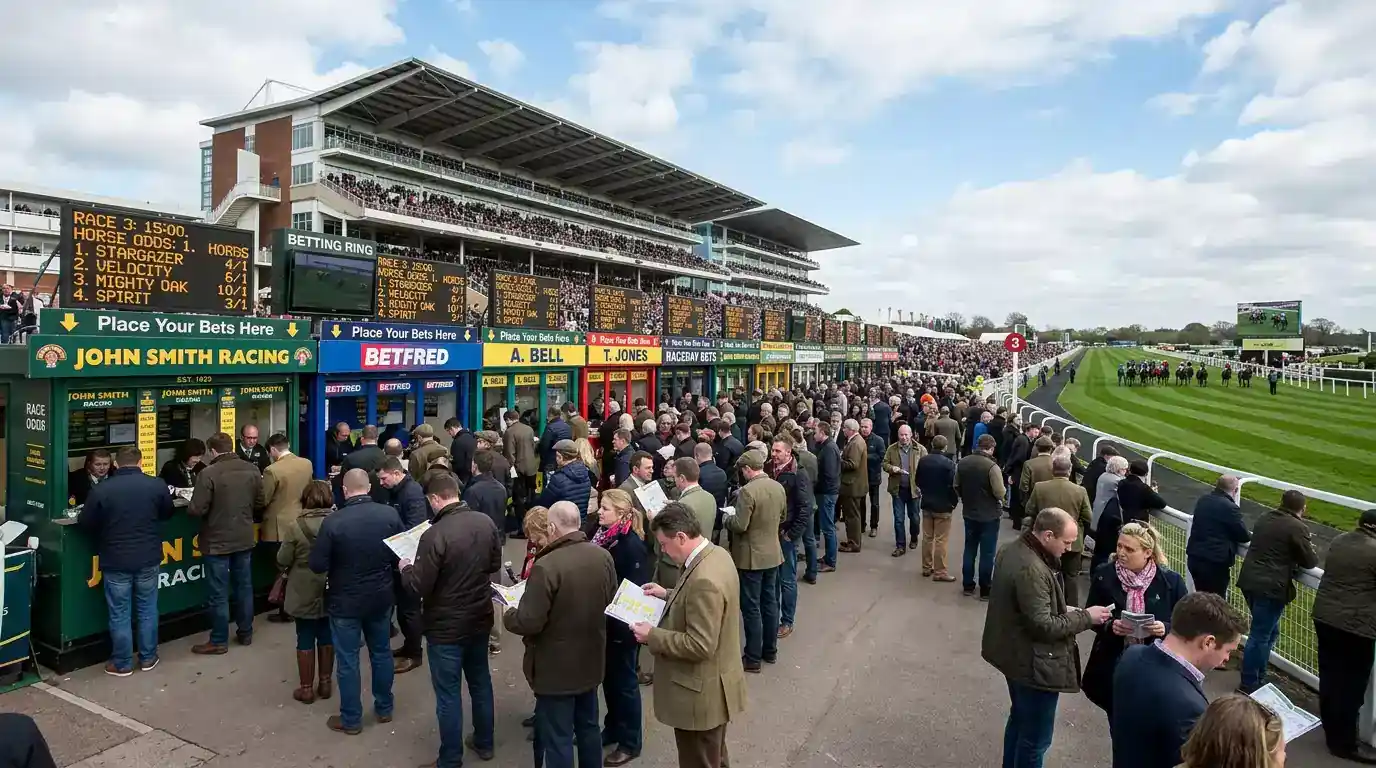
Table of Contents
- A Betting Menu Built Over Three Centuries — and Still Growing
- Win Bets: the Simplest Wager in Racing
- Place Bets: Backing a Horse to Finish in the Frame
- Each-Way Bets: the UK’s Signature Two-Part Stake
- Forecasts and Tricasts: Predicting the Exact Order of Finish
- Accumulators, Doubles, and Trebles: Linking Bets Across Races
- Tote Pool Bets: Placepot, Jackpot, and Scoop6
- UK Betting Types Questions Answered
A Betting Menu Built Over Three Centuries — and Still Growing
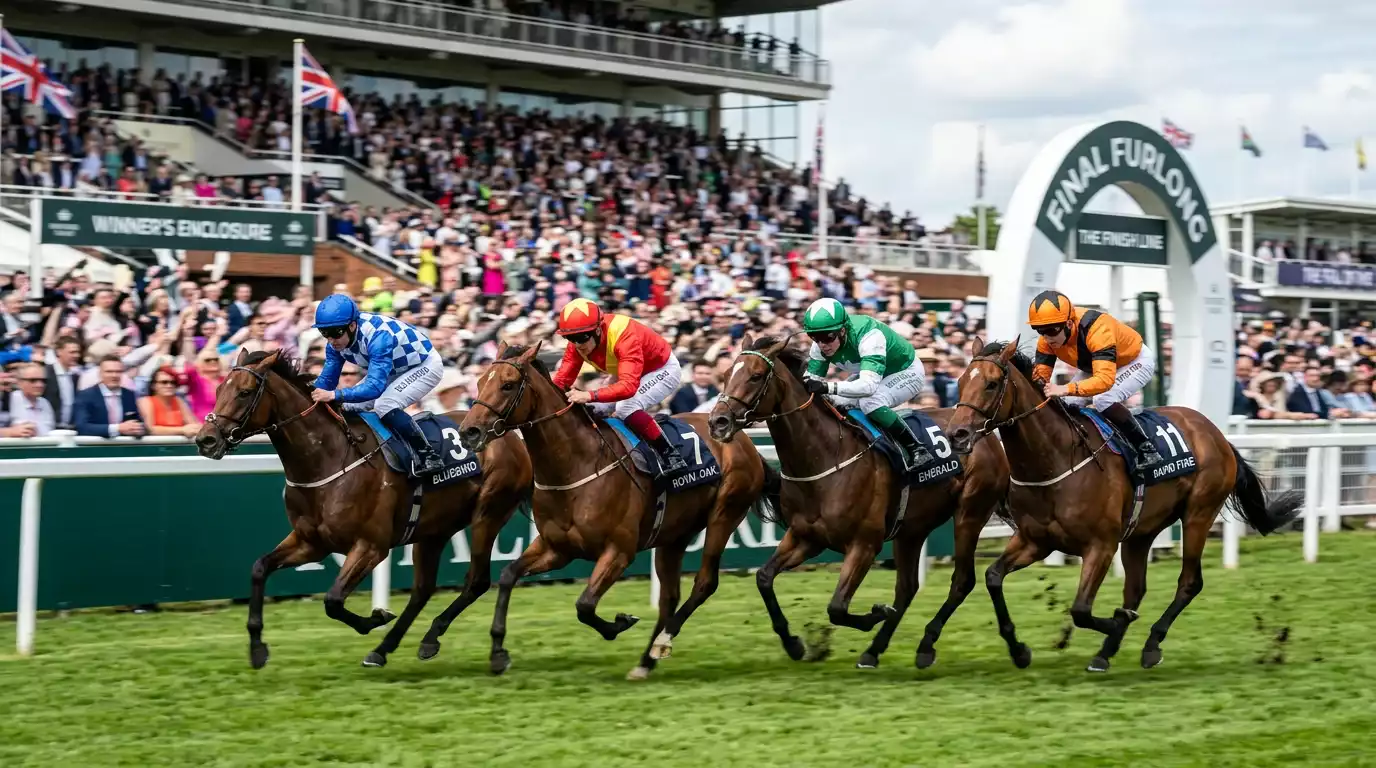
The first time I walked into a betting ring at Newmarket, a veteran bookmaker told me his grandfather had stood on the same patch of turf in the 1930s, offering exactly two bets: win and place. Today the slip menu at a UK racecourse stretches to dozens of wager types, from the win single that hasn’t changed in three hundred years to multi-race tote pools that didn’t exist before the 1970s.
British racing supports more than 85,000 jobs and contributes roughly four billion pounds to the UK economy each year, per BHA evidence submitted to Parliament. That economic weight rests, in part, on a betting infrastructure that offers punters an extraordinary range of ways to engage with a race. Understanding each bet type is not an academic exercise, it’s the difference between staking intelligently and throwing money at options you don’t fully grasp.
This guide covers every major bet type available to UK racing punters. Each section is designed to stand alone: if you already know your way around a win bet and want to jump straight to tote pools, go ahead. But if you’re building a complete picture from scratch, reading in sequence will layer the concepts in a way that makes each new type easier to absorb. The UK operates 59 licensed racecourses, hosts more than 1,500 fixtures a year, and offers a bet type for practically every appetite and bankroll. Here’s how they all work.
Win Bets: the Simplest Wager in Racing
Every other bet type in UK racing is, at its core, a variation on this one. A win bet backs a single horse to finish first. If it wins, you collect your stake multiplied by the odds. If it finishes anywhere else, second by a neck, third by a head, last by thirty lengths, you lose.
The simplicity is the appeal, and also the risk. Favourites win roughly 30-35% of UK races, per Matchbook Insights data, which means the market leader loses two out of three times. At longer odds the strike rate drops further: a 10/1 shot has an implied win probability of just over 9%. That raw arithmetic is why many punters reach for other bet types, each-way, place, multiples, as ways to soften the binary outcome of the win single.
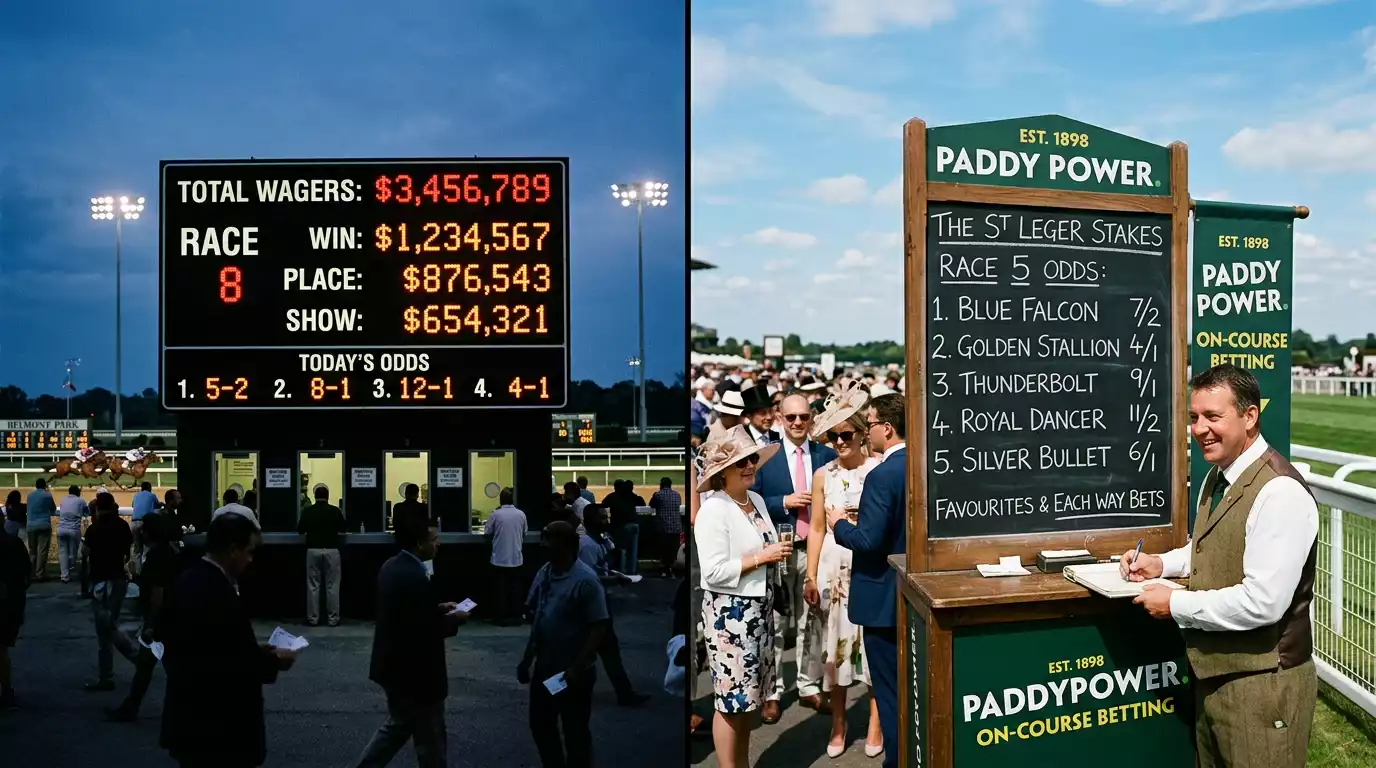
Win bets are settled at whichever price you took. If you backed a horse at 7/1 in the morning and it drifted to 10/1 by the off, you still get 7/1 (unless your bookmaker offers Best Odds Guaranteed, in which case you’d receive the better price). If you took SP, starting price, the official industry odds at the moment the race begins, you accept whatever the market settles at. Early prices offer certainty; SP offers flexibility. Both are standard for win bets at every UK bookmaker.
One detail worth noting: in races with very few runners, particularly two-horse races or match bets, the win bet is the only available wager. Place terms vanish, each-way betting disappears, and the entire race collapses into a single proposition, your horse or theirs. These races strip away every complication and leave you with the oldest bet in racing, unadorned.
Dead heats on win bets are settled by halving the stake for settlement purposes. If two horses share first place, your winning bet is divided, half settled at full odds, half treated as a loser. It happens rarely enough that most punters never encounter it, but when it does, the reduced payout catches people off guard. The same dead-heat rule applies to all bet types in UK racing, but it stings most on a win single where the full return was expected.
Place Bets: Backing a Horse to Finish in the Frame
A place bet doesn’t need your horse to win. It just needs it to finish in one of the designated positions — typically second or third, sometimes fourth in large-field handicaps. The trade-off is obvious: higher probability of collecting, lower payout when you do.
Place odds in UK fixed-odds markets are derived from the win odds by applying a fraction, usually 1/4 or 1/5, depending on the race type and the bookmaker’s terms for that event. A horse at 12/1 with 1/4 place terms pays 3/1 for a placed finish. The same horse at 1/5 terms pays 12/5 (2.4/1). That fraction makes a material difference to your return, and it’s the first thing a place bettor should check before committing.
The number of places paid varies with the field. In races with five to seven runners, two places are standard. Eight to fifteen runners and you get three. Sixteen or more in a handicap and four places are paid — sometimes more at major festivals, where bookmakers run promotional enhanced terms. Below five runners, place betting often disappears entirely, or the bookmaker offers place odds at significantly reduced fractions.
Place-only betting (as distinct from the place part of an each-way bet) is available at most UK bookmakers, on the Tote, and on betting exchanges. It’s a separate market with its own price, and that price can sometimes differ meaningfully from the derived place fraction of the win odds. Exchange place markets, in particular, offer transparency about where other punters think the true place probability sits, useful intelligence if you’re hunting for value in the frame rather than at the front.
One common misconception: a place bet is not automatically the place part of an each-way wager. An each-way bet bundles win and place together at a fixed fraction of the win odds. A standalone place bet is priced independently — the bookmaker or exchange sets the place odds without reference to the win price. This distinction matters because standalone place prices can occasionally offer better value than the derived fraction, particularly on horses whose place probability is underestimated relative to their win price.
Each-Way Bets: the UK’s Signature Two-Part Stake
If there’s one bet type that defines UK horse racing culture, it’s the each-way. During the Grand National, roughly 75% of all bets placed are each way, per grandnational.org.uk. No other wager type comes close to that level of dominance at a single event.
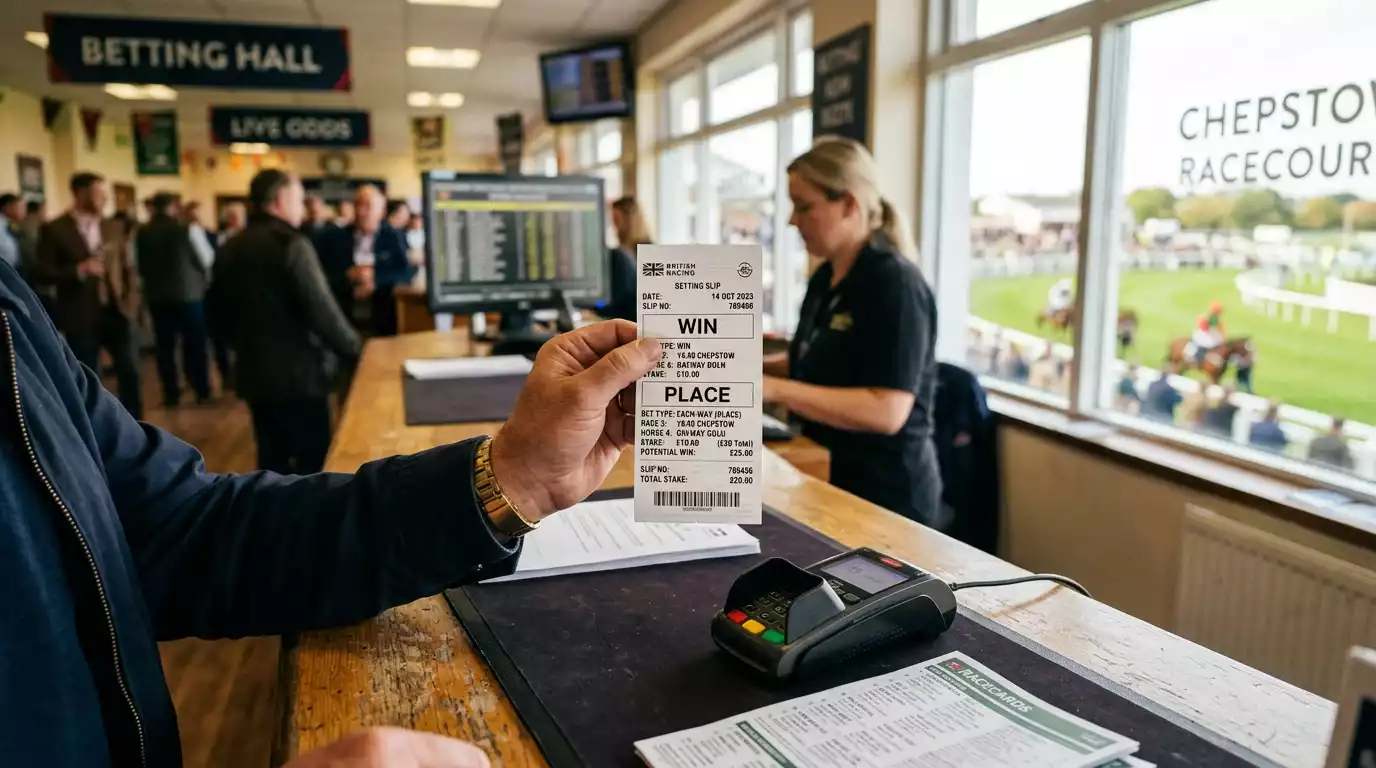
An each-way bet is two bets in one: a win single and a place single, at equal stakes. Back a horse for ten pounds each way and you’re spending twenty pounds total, ten on the win part at full odds, ten on the place part at a fraction of the win odds. If the horse wins, both parts pay. If it places without winning, only the place part returns. If it finishes outside the places, both parts lose.
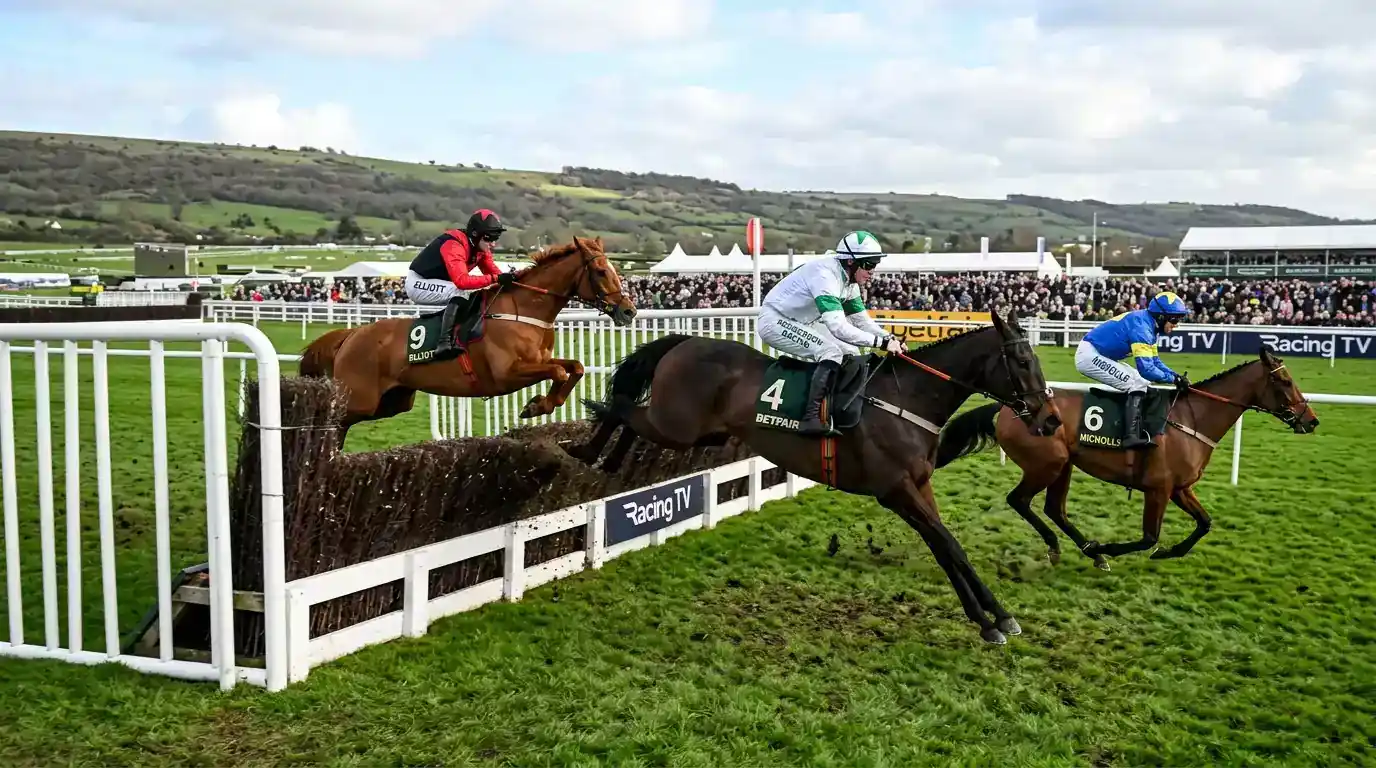
The appeal is the safety net. In a sixteen-runner handicap, your horse has a chance of placing in any of four positions rather than needing to beat every other runner. That widened target comes at a cost — you’re always staking double, but for prices above 5/1 or so, the place return on a non-winning result can cover or exceed the total each-way outlay. Below 5/1, the maths starts to work against you: the place portion doesn’t return enough to justify the doubled stake.
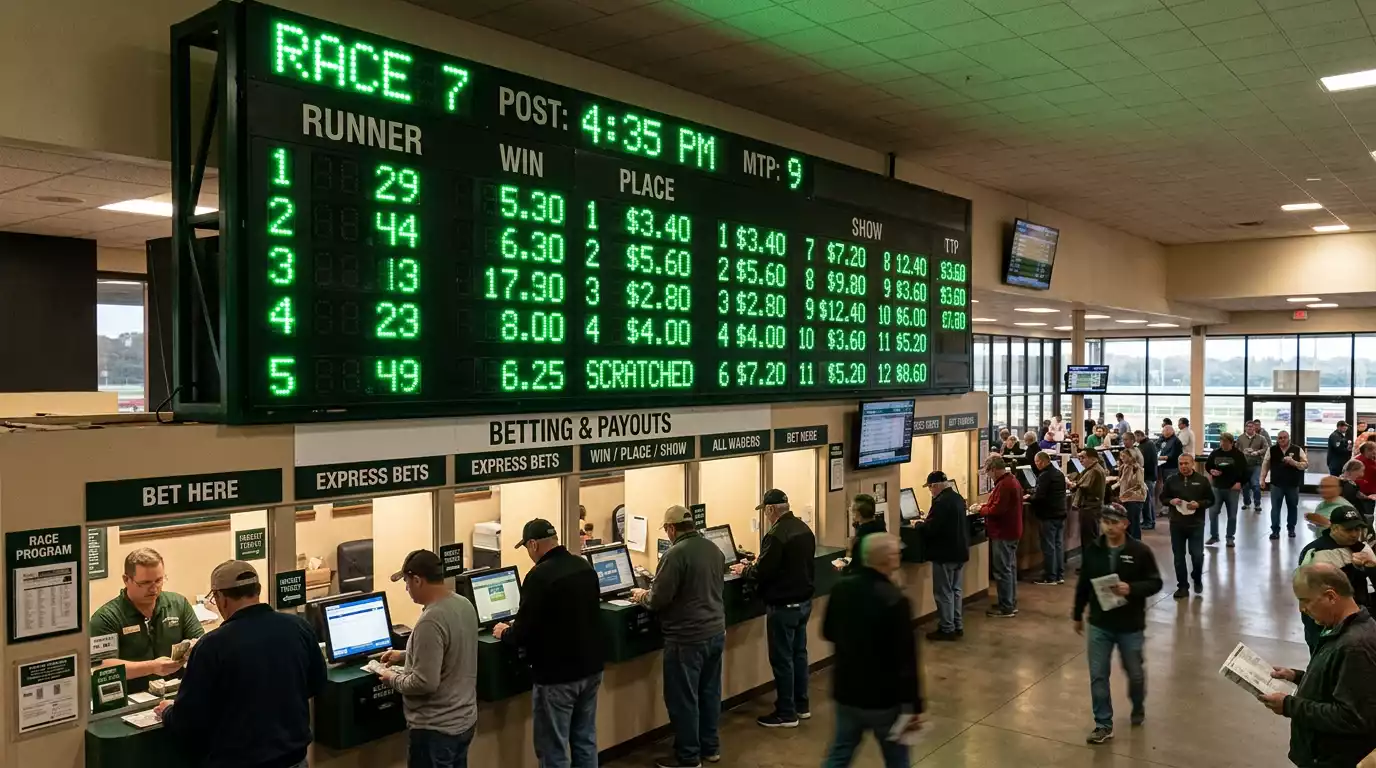
Each-way betting is not available in every racing market worldwide. The North American system uses separate win, place, and show pools instead. Understanding that the each-way bet is a specifically British structure — one that bundles two fixed-odds bets into a single slip, helps explain why place terms, fractions, and field-size thresholds matter so much to UK punters. The entire architecture of each-way value depends on them.
Forecasts and Tricasts: Predicting the Exact Order of Finish
Forecasts and tricasts ask you to do something much harder than picking a winner — they ask you to predict the precise order in which horses cross the line. The difficulty is reflected in the payout.
A straight forecast requires you to name the first and second horse in the correct order. Get both right and the dividend is substantial, because the probability of nailing two positions from a full field is dramatically lower than picking a single winner. A reverse forecast covers both possible orders of the same two horses (first-second and second-first), costing double the unit stake but halving the precision required. Computer Straight Forecasts, or CSFs, use a formula to calculate the payout based on the actual starting prices of the first two finishers, there are no fixed odds on these bets beforehand.
Tricasts extend the logic to three positions: first, second, and third in the correct order. The payouts can be enormous in competitive handicaps where the first three are all decent-priced. A tricast on three 10/1 shots finishing in the predicted order can return hundreds of times the stake. The obvious catch is that the probability of getting all three positions right is vanishingly small. A combination tricast covers all six possible orderings of your three selected horses, costing six times the unit stake but removing the need to specify the exact sequence.
Forecasts and tricasts are available on races with three or more runners (forecasts) and four or more (tricasts). They are settled through the Computer Straight Forecast and Computer Tricast formulas administered by the Horserace Betting Levy Board, not through bookmaker-set odds. This makes them one of the few bet types in UK racing where the payout is genuinely unknown until after the race has been run — a characteristic they share with tote pool bets but not with standard fixed-odds win or place wagers.
I rarely use forecasts and tricasts as standalone strategy tools. But as small-stake speculative bets alongside a core each-way or win selection, they add an extra dimension to the racecard without dramatically increasing overall outlay. The key is treating them as supplementary, not central, to your betting approach.
One practical tip: reverse forecasts on competitive handicaps with two fancied horses often deliver better risk-adjusted returns than a straight forecast on the same pair. The doubling of stake is offset by the elimination of the exact-order requirement, and in races where the top two in the market are genuinely hard to separate, the reverse forecast captures the correct outcome regardless of which one finishes a nose in front. For the same reason, combination tricasts on three closely matched runners at a premier meeting represent a structured way to access tricast returns without needing to predict a precise finishing order that even professional handicappers would struggle to call.
Accumulators, Doubles, and Trebles: Linking Bets Across Races
The word “acca” gets thrown around in racing circles with a mix of affection and resignation. An accumulator links two or more selections into a single bet, with the returns from each winning leg rolling into the stake for the next. The compounding effect is what makes accumulators seductive, and what makes them so hard to land.
The simplest multiple is the double: two selections, both must win. Your returns from the first winner become the stake on the second. If both oblige, the payout reflects the combined odds. A treble adds a third leg; a four-fold adds a fourth; and so on up to the limits of your bookmaker’s slip (typically fifteen or twenty legs, though anything beyond five or six is deep into lottery territory).
Each-way accumulators add a layer of complexity. They function as two parallel accumulators — a win acca and a place acca, running simultaneously across the same selections. If all your horses win, both accas pay and the return is substantial. If some horses place without winning, the win acca fails but the place acca can still return a partial payout. The maths of compounded place odds across four or five legs can produce surprising results, even when no individual horse wins outright.
Beyond straightforward accumulators, UK bookmakers accept a range of full-cover and part-cover combination bets. A Trixie covers three selections in three doubles and one treble (four bets total). A Yankee covers four selections in six doubles, four trebles, and one four-fold (eleven bets). A Lucky 15 adds four singles to a Yankee (fifteen bets). These combination bets reduce the all-or-nothing risk of a single accumulator by breaking your selections into overlapping multiples — but they multiply your total stake accordingly. An across-the-board bet in North American racing serves a similar risk-reduction purpose, though the mechanics are entirely different.
The honest reality of accumulators: they are structurally poor value for the punter. Each additional leg multiplies the bookmaker’s margin into your payout. A four-fold at four separate odds of 2/1 should return 80/1 in a fair market, but bookmaker margins on each leg reduce the effective return below that. For serious bankroll management, singles and doubles are the most capital-efficient forms of racing bet. Accumulators are entertainment with a long-odds payoff, and there’s nothing wrong with that, provided you stake accordingly.
Tote Pool Bets: Placepot, Jackpot, and Scoop6
Kevin Walsh, Racing Director at the Racecourse Association, noted that prize money levels in British racing continue to climb — reaching a record 194.7 million pounds in 2025, and part of the ecosystem supporting that growth is the UK Tote, which operates a pari-mutuel betting system running alongside the dominant fixed-odds market.
Pari-mutuel betting works on a fundamentally different principle to fixed odds. Instead of the bookmaker setting a price and the punter accepting it, all stakes on a particular pool are collected together, a percentage is deducted (the takeout), and the remaining pool is divided among winning tickets. Your payout depends not on pre-set odds but on how much money the other bettors put on each horse. The pari-mutuel share of UK racing turnover sits at roughly 5% — a niche within a niche, but the pools it generates fund some of racing’s most distinctive bets.
The Tote Win and Tote Place pools mirror their fixed-odds equivalents in structure: back a horse to win or place, and your return is determined by the final pool division. The dividends are declared after the race, which means you never know your exact payout at the time of staking. On occasion, particularly in races where a lightly backed horse wins, the tote dividend exceeds the fixed-odds SP — a pleasant surprise for pool bettors. More often, heavily backed favourites return less on the tote than with a bookmaker, because the pool is concentrated on one horse.
The Tote’s real distinctiveness lies in its multi-race pools. The Placepot asks you to find a placed horse in each of the first six races at a meeting, a test of consistency rather than single-race brilliance. Entry costs as little as one pound per line, and dividends on competitive cards can run into hundreds or thousands of pounds. The Jackpot requires you to pick the winner of each of the first six races — a much tougher proposition that produces eye-catching payouts when no single ticket hits all six legs. The Scoop6, the Tote’s flagship pool, operates on six selected races across a Saturday card, with a bonus fund rolling over into the following week if it’s not won. These pools attract dedicated communities of punters who specialise in permutation betting, constructing lines with multiple selections per leg to increase coverage at the cost of a higher total stake.
For punters accustomed to fixed-odds betting, the Tote offers a genuinely different experience. There’s no bookmaker to beat, no early-price versus SP decision, and no BOG safety net. You’re betting into a pool alongside every other punter at the track and online. The edge, if it exists, comes from backing horses that the pool has underweighted, the same principle as fixed-odds value betting, applied to a different settlement mechanism. The Gambling Commission’s GGY data for remote horse racing betting — 766.7 million pounds for the year to March 2025, includes tote betting, but the pool’s share is a fraction of the fixed-odds total, reflecting its specialist rather than mainstream position in the market.
UK Betting Types Questions Answered
What is the most popular bet type in UK horse racing?
The each-way bet dominates UK horse racing, particularly at major events. During the Grand National, roughly 75% of all bets placed are each way, per grandnational.org.uk. On an ordinary race day the split is more even between win singles and each-way bets, but the each-way remains the signature UK racing wager across the calendar.
Can you combine different bet types in one slip at a UK bookmaker?
Most UK bookmakers allow you to combine selections across bet types on a single slip, within limits. You can place a double linking two win selections from different races, or an each-way treble across three meetings. What you cannot do is combine bets within the same race on the same slip — backing the same horse to win and placing a separate forecast in that race would require two individual bets. Combination bets like Trixies, Yankees, and Lucky 15s are specifically designed to bundle multiple selections into a single structured wager.
How do tote pool bets differ from fixed-odds bets on the same race?
Fixed-odds bets lock in a price at the moment you place them — you know your potential return before the race starts. Tote pool bets are pari-mutuel: all stakes go into a shared pool, a deduction is taken, and the remainder is split among winning tickets. Your payout depends on how many others backed the same horse. The tote can pay more than fixed odds on lightly backed horses and less on heavy favourites. The pari-mutuel share of UK racing turnover sits at around 5%, with fixed-odds bookmakers handling the vast majority.
The full picture is in our guide to UK place and each-way betting.
The two-part wager in detail: each-way betting explained.
Created by the ”Horse Racing Show bet” editorial team.