Each-Way Betting as Insurance: Using the Place Portion to Protect Your Stake
Best Horse Racing Betting Sites – Bet on Horse Racing in 2026
 Available in US
The Safety Net That Costs Half Your Bet
My earliest memories of betting at the track involve my uncle placing every bet each-way without exception. He called it his insurance policy. When I asked why he didn’t just back the horse to win and save the extra stake, he gave me a look that suggested the question was absurd. “Because the horse might not win but still run a blinder,” he said. “And I want to get paid for a good call even if it doesn’t quite come off.” That logic is sound — as far as it goes. But like any insurance, the each-way safety net has a premium, and sometimes the premium is not worth paying.
The each-way bet divides your stake equally between a win bet and a place bet. If the horse wins, both portions pay. If the horse places but does not win, only the place portion pays. If the horse finishes outside the places, both portions lose. The place portion functions as insurance because it recovers some or all of your total outlay when the horse runs well without winning. The cost of that insurance is the stake you commit to the place bet — money that earns a smaller return than if it had been added to a win-only bet on a winner.
When the Insurance Premium Is Worth Paying
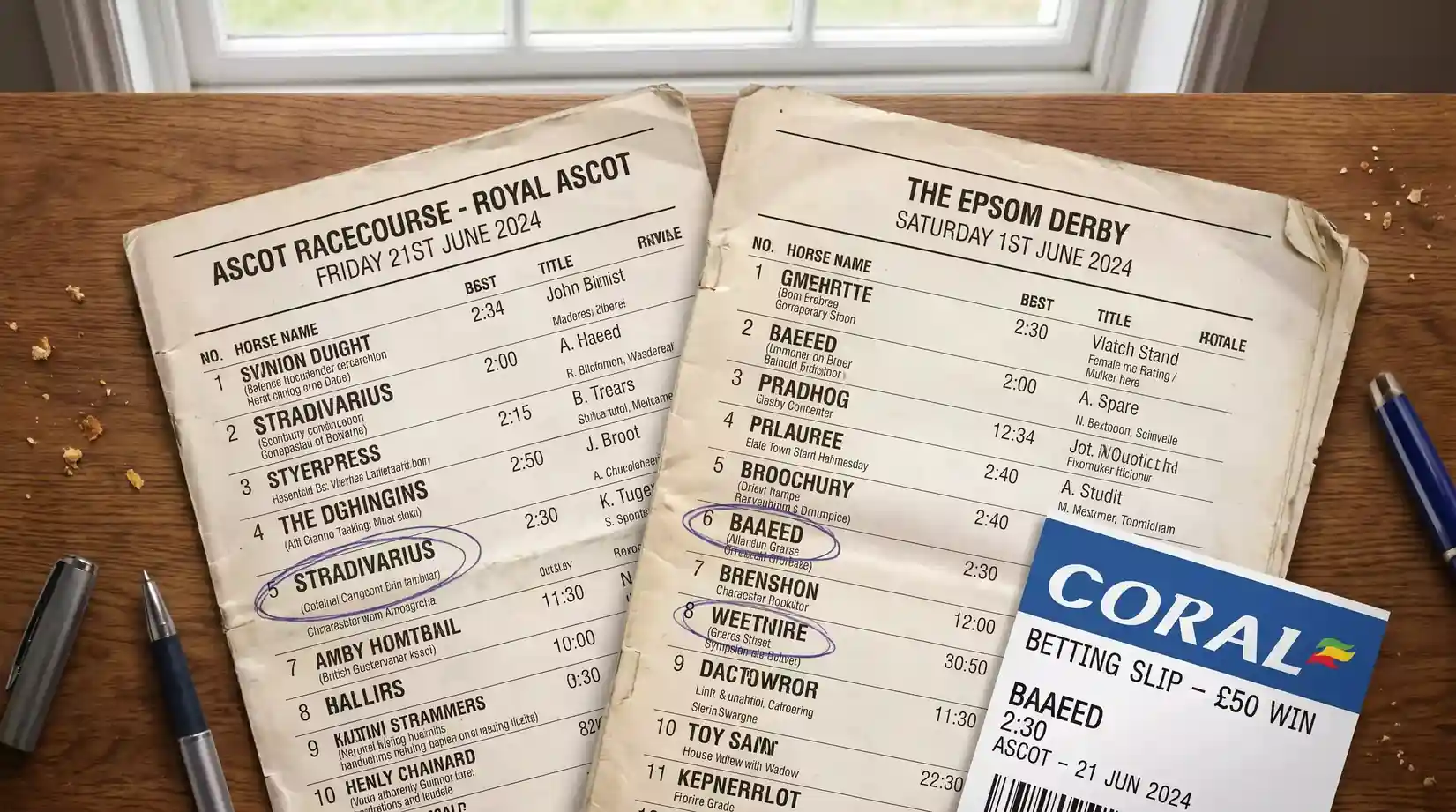
The insurance value of the place portion depends on the odds and the place terms. At 10/1 with 1/4 place terms, the place odds are 2.5/1. If the horse places, you receive 2.5 times your place stake plus the stake back, which on a five-pound each-way bet returns 17.50 on the place portion against a total outlay of ten pounds. Your net position: a profit of 7.50 on a horse that didn’t win. The insurance has paid a claim.
At 2/1 with 1/4 place terms, the place odds are 1/2. The same five-pound place stake returns 7.50 on a place finish — a net loss of 2.50 against the ten-pound total outlay. The insurance covered some of your loss but you are still down. At these short odds, the place portion is a poor insurance product because the claim payout does not cover the combined premium.
The breakeven point — where the place return exactly covers the total each-way stake — depends on the win odds. At 1/4 place terms, the place portion breaks even at win odds of 4/1 (place odds of evens). Above 4/1, a placed horse returns a net profit on the overall bet. Below 4/1, a placed horse reduces your loss but does not eliminate it. This is why experienced each-way punters rarely bet each-way at prices shorter than 4/1 or 5/1: the insurance is too expensive for the cover it provides.
The Hidden Cost of Automatic Each-Way Betting
My uncle’s approach — every bet each-way, regardless of price — is common among recreational punters. Roughly 75% of bets on the Grand National are placed each-way, according to grandnational.org.uk data, and in a forty-runner race at long odds, that makes perfect sense. But applying the same habit to a six-runner conditions race at 3/1 destroys value. The place portion at 3/4 (place odds from 3/1 at 1/4 terms) barely moves the dial if the horse places, and the ten-pound outlay instead of five reduces your return if the horse wins.
Consider the opportunity cost. A ten-pound each-way bet at 3/1 costs twenty pounds. A ten-pound win-only bet costs ten. If the horse wins, the each-way returns 40 pounds (30 win + 10 stake return) plus 7.50 (place odds 3/4 x 5 + 5 stake return) = 47.50. A twenty-pound win-only bet returns 80 pounds. The win-only bet outperforms by 32.50 when the horse wins, and you are only worse off in the scenario where the horse places but does not win — where the each-way bet loses 12.50 net while the win-only bet loses 20 pounds. At 3/1, the probability of placing without winning is relatively low in a small field, and the saving when it happens does not compensate for the sacrificed upside when the horse wins.
Top online casinos in the UK
- WinBeastBonus: €5000 + 500 FS + €650 Freebet · Payout speed: 1-3 business days
- NightWinBonus: £900 + 400 free spins · Payout speed: 1-3 business days
- ZombillionBonus: Welcome Pack 250% up to £4000 + 200 FS · Payout speed: 1-3 business days
- AmunbetBonus: Join now and get 450% up to 2,700 GBP + 450 FS · Payout speed: 1-3 business days
- JetsetspinsBonus: 200% Bonus + 100 Free Spins + Free Royal Wheel · Payout speed: 1-3 business days
- BritsinoBonus: Welcome Package – Get your £2,200 + 2,000 FS · Payout speed: 1-3 business days
Strategic Insurance: Matching Each-Way to Race Type
The insurance framing works best when you apply it selectively. Each-way betting is a powerful strategy in large-field handicaps at double-digit odds, where the place terms are generous and the place probability is meaningfully higher than the win probability. It is a poor strategy on short-priced horses in small fields, where the place portion is expensive relative to its payout and the win probability is already high enough to justify a straight win bet.
Entain’s Simon Clare noted that 82% of Grand National cash wagers are five pounds or less. Many of those modest stakes go on each-way, turning a small outlay into a bet that can return a meaningful amount from a place finish at big odds. For a casual punter staking a fiver each-way on a 25/1 shot in a twenty-runner handicap, the place portion at 1/4 odds (6.25/1) is genuine insurance: a place finish returns 36.25 on a ten-pound total outlay, a comfortable profit. The insurance premium is worth it because the claim payout is substantial.
For more serious punters managing a bank, the question is whether the expected value of the place portion justifies the stake allocated to it. If you estimate a horse’s place probability at 30% and the implied place probability from the odds is 22%, the place bet alone has positive expected value — the insurance is not just a safety net but a stand-alone value bet wrapped inside the each-way structure. This is where understanding the distinction between place bet types becomes essential: knowing whether to bet each-way, place-only, or win-only depends on where the value actually sits.
When to Drop the Insurance and Back Win-Only
Several situations call for abandoning the each-way safety net. First, when your selection is priced below 5/1 and the field has fewer than eight runners. The place terms are tight, the place return is minimal, and your money works harder as a win-only bet. Second, when you have strong conviction that the horse will either win or run nowhere — a horse with a front-running style that either leads throughout or fades tamely. The all-or-nothing profile does not suit each-way because the place portion rarely activates.
Third, when the place market on an exchange offers better value than the bookmaker’s derived place terms. If you can back the horse place-only at 3.5 on the exchange while the bookmaker’s each-way terms imply place odds of 3.0, you are better off splitting your stake into a separate win bet and a separate exchange place bet rather than using the bundled each-way product. The insurance analogy holds: you would not buy a bundled home-and-car insurance policy if a separate car policy from another provider were cheaper.
Insurance With Eyes Open
The each-way bet is not inherently good or bad insurance. It is a product with a variable premium and a variable payout, and its value depends entirely on the price, the place terms, and the race conditions. Treating every bet as each-way wastes money on short-priced favourites. Treating every bet as win-only leaves value on the table in big-field handicaps at long odds. The intelligent approach is to assess each race independently, calculate the break-even point, and buy the insurance only when the premium makes sense.
At what odds does each-way betting become worthwhile?
At standard 1/4 place terms, the place portion of an each-way bet breaks even when the win odds are 4/1 or above. Below 4/1, a placed horse reduces your loss but still leaves you down overall. Most experienced punters use 5/1 as a practical minimum for each-way betting, though the optimal threshold depends on field size and the number of places paid.
Can the place portion of an each-way bet be profitable on its own?
Yes. When the implied place probability from the odds is lower than the horse’s true place probability, the place portion has positive expected value as a standalone bet. This commonly occurs with mid-priced horses in large-field handicaps where bookmakers derive place odds from win prices using a fixed fraction that underestimates place chances.
The full picture is in our guide to UK place and each-way betting.
Where the hedge pays best: value on longshots.
Published by the Horse Racing Show bet team.