Win, Place, Show: How the Three-Tier System Works
Best Horse Racing Betting Sites – Bet on Horse Racing in 2026
 Available in US
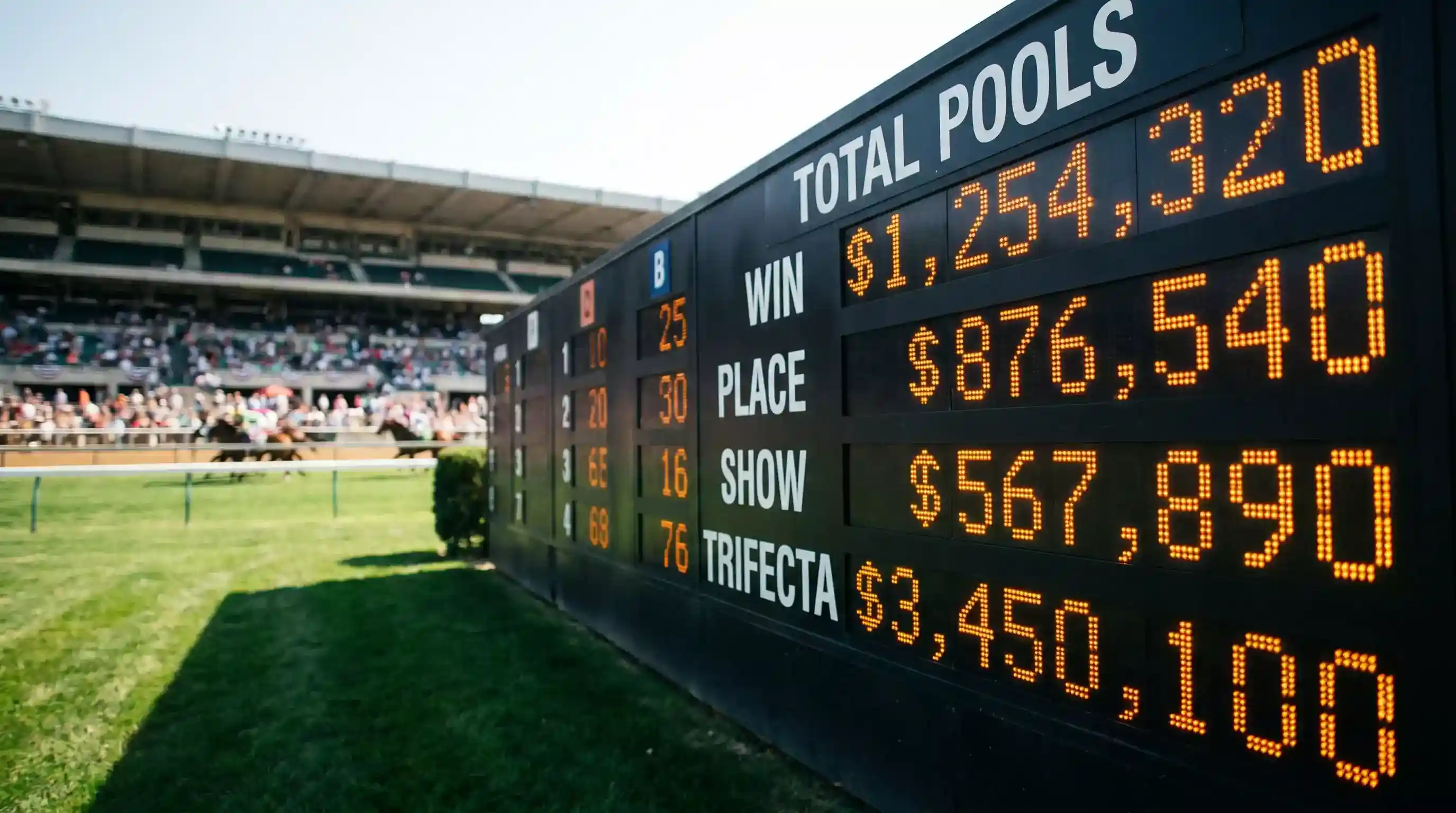
Table of Contents
Three Bets, Three Finish Positions, One Pool
I spent a week at Saratoga Springs early in my career, and the first thing that struck me was the language. Everyone around me kept saying “gimme a two-pound show on the five horse” as if they were ordering coffee. In the UK, nobody walks up to a betting ring and asks for a show bet — the term simply does not exist in our market. Yet thousands of British punters type “show bet horse racing” into a search engine every month, usually after watching an American broadcast or reading a US-focused tipping column.
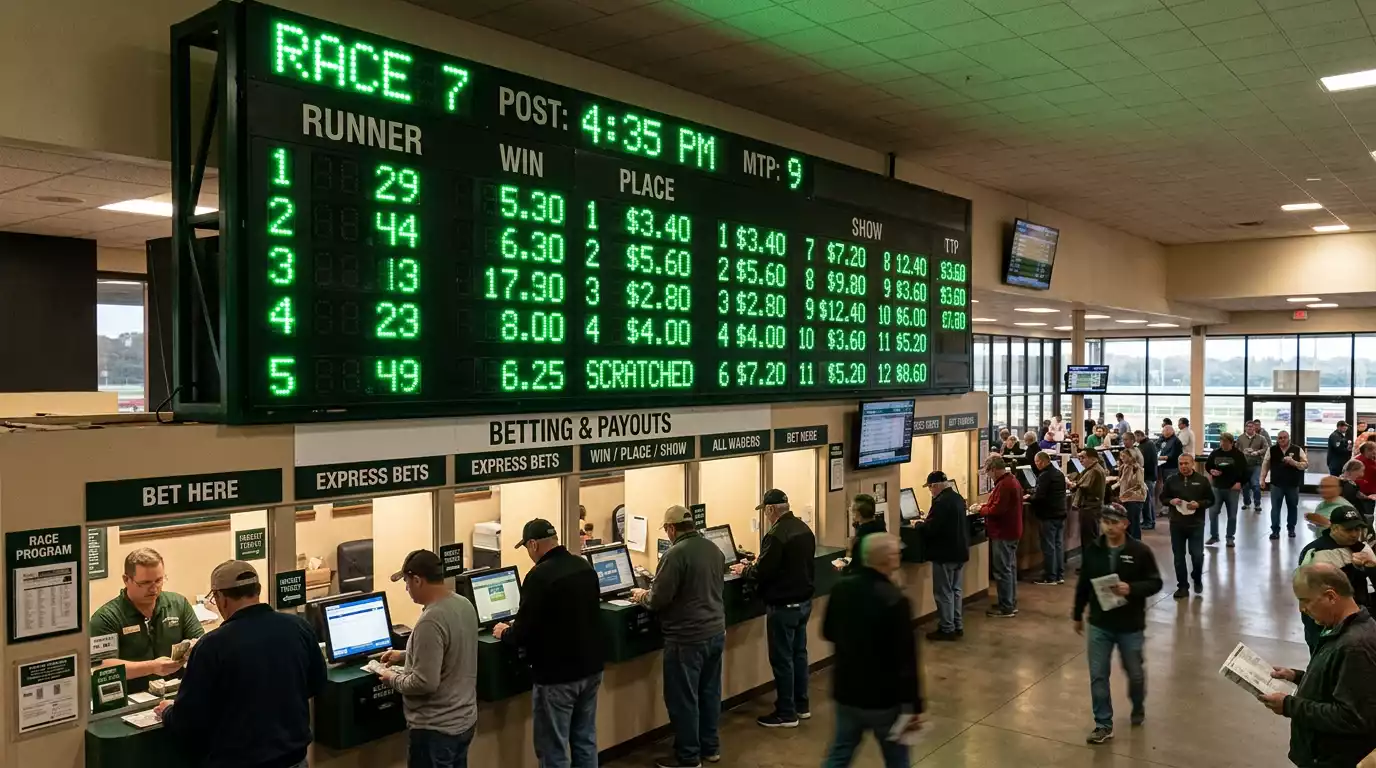
The confusion is understandable. North American racing structures its straight wagers into three distinct tiers — win, place, and show — each tied to a pari-mutuel pool. Every pound wagered on a particular tier goes into that tier’s pool, the track takes its cut, and whatever remains is split among winning tickets. The pari-mutuel model accounts for roughly 5% of total UK horse racing wagering, per Gambling Commission data, but it dominates the American landscape entirely. That single structural difference shapes everything: the odds you see, the payouts you receive, and the vocabulary you use at the window.
Understanding the three-tier system matters even if you never place a bet at a US track, because it clarifies why British betting evolved differently — and why the comparison between show bets and UK place bets is not as straightforward as it first appears.
Win Bets: First Past the Post or Nothing
A friend of mine once described win betting as “the honest wager” — you pick the horse, it either finishes first or you lose. There is no safety net, no partial payout for a gallant second. In the North American pari-mutuel system, every win ticket contributes to the win pool. When the race ends, the track deducts its takeout — typically somewhere between 15% and 20%, depending on the state — and the rest is divided proportionally among all tickets on the winning horse.
The beauty of the win pool is its transparency. You can watch the tote board update in real time and calculate your approximate return before the gates open. If £500,000 sits in the win pool, £100,000 of it is on horse number 3, and the takeout is 16%, then backing number 3 to win returns roughly £4.20 for every £2.00 wagered. Those odds shift with every new ticket sold, which is a fundamentally different experience from the fixed-odds price you lock in at a UK bookmaker.
Win bets attract the sharpest money. Professional horseplayers in the US concentrate their bankroll on win wagers because the takeout is usually lower than on exotic pools, and because the relationship between risk and reward is the cleanest. One horse, one result, one pool.
Place Bets: Collecting When Your Horse Finishes in the Top Two
Here is where the transatlantic vocabulary starts to diverge. In North America, a “place” bet pays if your horse finishes first or second. That is it — top two only. The place pool operates separately from the win pool, and the payout is divided among tickets on the first and second finishers.
The maths works the same way as the win pool: total wagered, minus takeout, divided among qualifying tickets. But because two horses can trigger a payout instead of one, the returns are naturally lower. If you back a 5/1 shot to win and it finishes first, you collect from the win pool at full price. If you back the same horse to place, and it finishes second, you collect from the place pool at a fraction of that price — because the first-place finisher’s backers are also sharing the pool.
British punters sometimes assume that a US place bet is identical to a UK place bet. It is not. In the UK, depending on the number of runners, a place bet can cover the top two, three, or even four finishers. In the US, place always means top two, regardless of field size. That distinction matters enormously when you start comparing payouts.
Show Bets: the Safety Net That Pays for a Top-Three Finish
The show bet is the widest net in the three-tier system. Back a horse to show and you collect if it finishes first, second, or third. Three finishers split the pool, which is why show payouts are the smallest of the three tiers — often returning little more than your original stake on a favourite.
I have watched US bettors put serious money on show bets during Triple Crown races, treating them almost like savings accounts. The logic runs: in a 20-runner Kentucky Derby, even a moderate longshot has a reasonable probability of finishing in the top three, and a show bet on a 15/1 outsider can still return a decent multiple. Favourites in British racing win roughly 30-35% of the time, per Matchbook Insights analysis, but the percentage that finish in the top three is significantly higher — a pattern that holds in American fields too and makes show betting attractive to conservative bettors.
The catch is the takeout. Show pools often carry a higher deduction than win pools, and the three-way division of the remaining money compresses returns further. On a short-priced favourite, a show bet might return £2.10 on a £2.00 wager — a 5% profit before you factor in the time and energy spent handicapping the race. That is why experienced US horseplayers tend to view show betting as a beginner’s tool or a hedging mechanism, not a primary strategy.
Combining All Three: the Across-the-Board Ticket
Walk up to any US tote window and ask for a horse “across the board” and you will get three separate bets — win, place, and show — on a single horse. The total stake triples: a £2 across-the-board ticket costs £6. If the horse wins, you collect from all three pools. If it finishes second, you collect place and show. Third, show only.
The appeal is psychological more than mathematical. Across-the-board feels like comprehensive coverage, a way to profit regardless of exactly where your horse finishes in the top three. In practice, the combined cost dilutes the value of each tier. You are paying £6 for the privilege of collecting from a show pool that might return £2.40, which means the show portion barely breaks even on a favourite while your win portion does all the heavy lifting.
Critics — and I count myself among them — argue that across-the-board is a bet that flatters cautious thinking without delivering superior value. If you genuinely believe a horse will win, a straight win bet puts your entire stake into the pool with the best return potential. If you think it will run well but might not win, a show bet at least concentrates your money on the safest outcome. Spreading across all three tiers satisfies the desire for action more than the desire for profit. Spreading across all three rarely outperforms concentrating your stake on the single pool where you see the most value.
Win, Place, Show Questions Answered
Is win, place, show the same as an each-way bet?
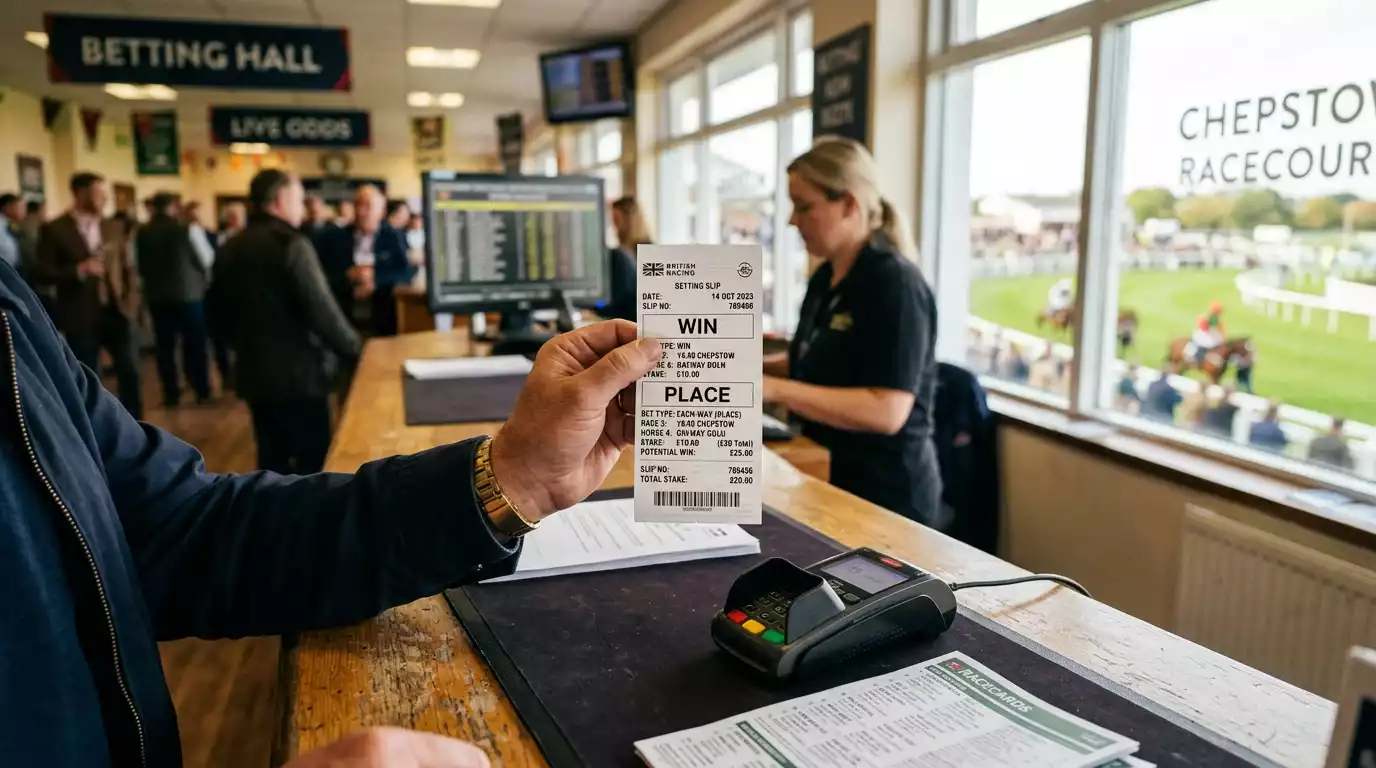
Not quite. An each-way bet in UK racing is a two-part wager — win and place — with the place portion covering two to four finishing positions depending on the field size. The US win, place, show system runs three separate pools, and ‘place’ only ever covers the top two finishers. Each-way combines win and place into a single split stake, while the American system treats each tier as a standalone bet.
Can you bet show only without win or place on the same ticket?
Yes. In North American pari-mutuel racing you can place a standalone show bet without adding win or place. Each tier operates as an independent pool, so there is no requirement to combine them. A show-only ticket costs a single unit stake and pays out if your horse finishes in the top three.
The full picture is in our guide to UK place and each-way betting.
The British equivalent: show bet vs place bet.
Written by the editors at Horse Racing Show bet.