Place-Only Bets: Backing a Horse to Finish in the Frame
Best Horse Racing Betting Sites – Bet on Horse Racing in 2026
 Available in US
Table of Contents
- Stripping the Win Part Away: When Place-Only Makes Sense
- Top online casinos in the UK
- Where to Find Place-Only Markets in the UK: Bookmakers, Tote, and Exchanges
- Place-Only vs Each-Way: Comparing the Maths on the Same Selection
- Scenarios Where a Place Single Outperforms an Each-Way Bet
- Place-Only Betting Questions Answered
Stripping the Win Part Away: When Place-Only Makes Sense
There is a horse I watched run twelve times over two seasons. It won once. It finished in the places nine times. Every time I backed it each-way, the win portion was dead money — a five-pound donation to the bookmaker on a horse that consistently ran well without quite getting its head in front. After the eighth placed finish, I started wondering: why am I paying for a win bet on a horse that does not win?
That question led me to place-only betting, and it changed how I think about a certain type of selection. Favourites in British racing win roughly 30-35% of the time, according to Matchbook Insights analysis. The place rate is considerably higher. For horses priced in the 6/1 to 14/1 range, the gap between win probability and place probability is where the value of a standalone place bet lives. You are not hedging, not splitting your stake — you are expressing a single opinion: this horse will finish in the frame.
Top online casinos in the UK
- WinBeastBonus: €5000 + 500 FS + €650 Freebet · Payout speed: 1-3 business days
- NightWinBonus: £900 + 400 free spins · Payout speed: 1-3 business days
- ZombillionBonus: Welcome Pack 250% up to £4000 + 200 FS · Payout speed: 1-3 business days
- AmunbetBonus: Join now and get 450% up to 2,700 GBP + 450 FS · Payout speed: 1-3 business days
- JetsetspinsBonus: 200% Bonus + 100 Free Spins + Free Royal Wheel · Payout speed: 1-3 business days
- BritsinoBonus: Welcome Package – Get your £2,200 + 2,000 FS · Payout speed: 1-3 business days
Where to Find Place-Only Markets in the UK: Bookmakers, Tote, and Exchanges
Place-only betting is less universally available than each-way, but it is far from rare. The main routes are fixed-odds bookmakers, the Tote, and betting exchanges, and each channel prices place bets differently.
Most major UK-licensed bookmakers offer place-only markets on selected races, typically those with larger fields. The odds are set by the bookmaker’s traders, not derived from the win odds by applying a fraction. This is a crucial distinction: a place-only price is an independent market assessment of the horse’s probability of finishing in the places. It may be more or less generous than the place portion of an each-way bet, depending on how the bookmaker prices each market.
The Tote runs pari-mutuel place pools at every meeting. Your return depends on the total wagered and the number of qualifying finishers, not on a pre-agreed price. Pari-mutuel wagering accounts for roughly 5% of UK horse racing turnover, per Gambling Commission figures, but Tote place pools can occasionally deliver higher dividends than fixed-odds equivalents — particularly on lightly-backed horses in big fields.
Betting exchanges offer the most transparent place-only market. You can back a horse to place at odds set by other bettors, or lay a horse to miss the frame. The exchange determines the number of places based on the number of runners, mirroring standard industry terms. Commission on net winnings is the exchange’s revenue model, which means the odds you see are generally closer to the true market price than a bookmaker’s fixed-odds offering.
Place-Only vs Each-Way: Comparing the Maths on the Same Selection
Each-way betting dominates the UK market — approximately 75% of all Grand National bets are each-way, per grandnational.org.uk data — but dominance does not mean superiority in every scenario. The mathematical comparison between place-only and each-way depends on a single variable: how likely the horse is to win versus how likely it is to place.
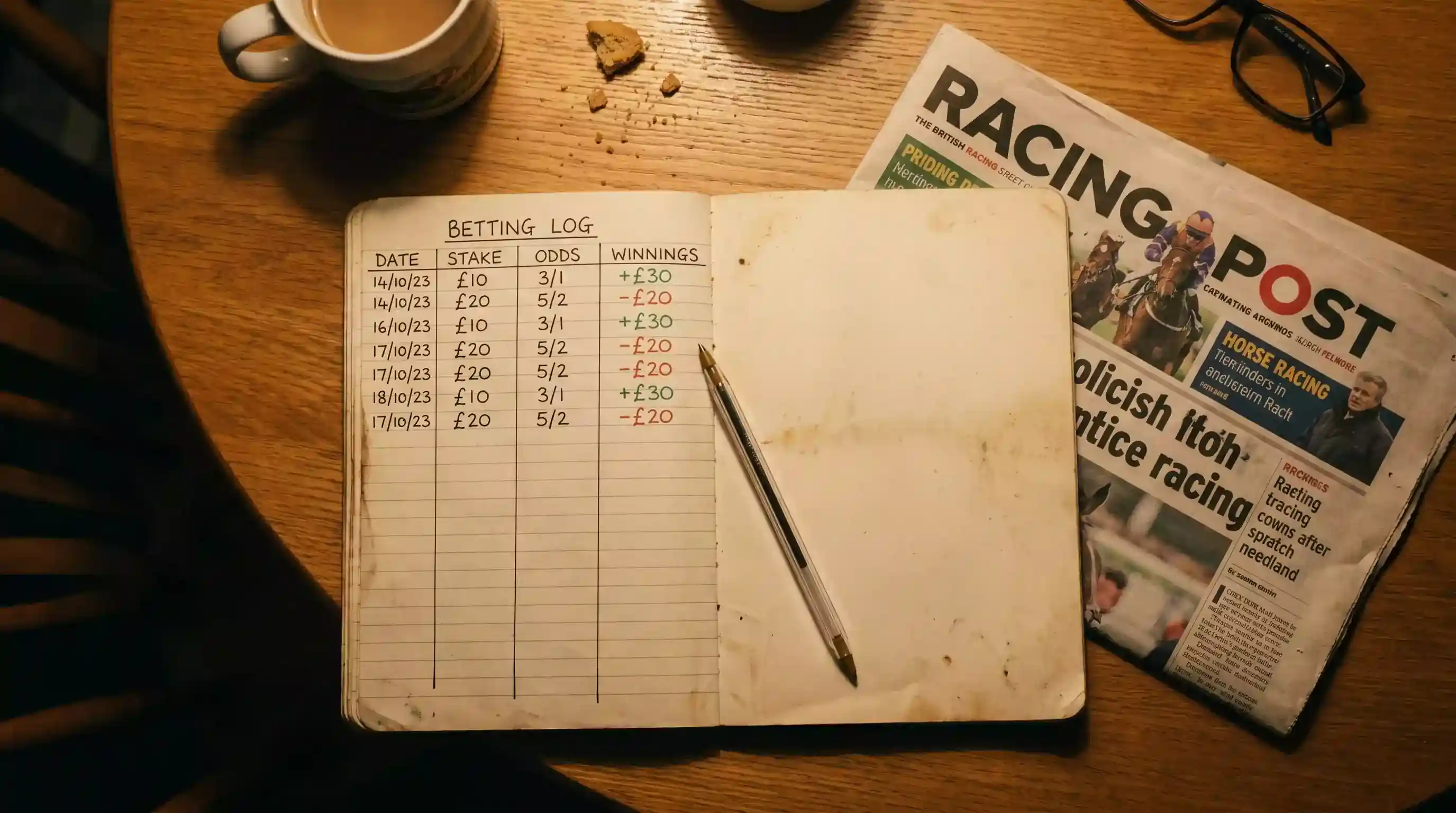
Take a horse priced at 12/1 in a fourteen-runner race with 1/4 place terms and three places paid. An each-way bet at ten pounds total (five pounds each way) gives you a win return of 65 pounds and a place return of 20 pounds. If the horse places but does not win, you collect 20 pounds on a 10-pound outlay — a 10-pound profit.
Now consider a place-only bet at the independently priced place odds. If the bookmaker’s place-only market offers 3/1 (which would be slightly more generous than the 3/1 derived from 12/1 at 1/4), a ten-pound place-only bet returns 40 pounds — a 30-pound profit. You have committed the same total stake but directed it entirely at the outcome you believe is most likely. The trade-off is obvious: if the horse wins, you miss the 65-pound win payout entirely. You collect only the place return.
The decision hinges on your assessment of the horse’s profile. Serial placers — horses with high place rates but low win rates — are natural candidates for place-only bets. Horses with explosive but inconsistent form — capable of winning but equally capable of running poorly — are better served by each-way, where the win portion captures the upside.
Scenarios Where a Place Single Outperforms an Each-Way Bet
After nine years of tracking place-market data, I have identified three situations where a place-only bet consistently delivers better expected value than an each-way wager.
The first is the consistent placer in big-field handicaps. A horse that has finished in the first four in six of its last eight runs, but has won only once, is telling you something about its profile. The win portion of an each-way bet on this type of horse is a tax on optimism. A place-only bet removes that tax and puts the full stake behind the pattern the form is screaming at you.
The second scenario is when place-only odds are noticeably more generous than the derived each-way place odds. This happens more often than you might think, particularly on exchanges and in independently priced bookmaker place markets. If the each-way place odds work out at 5/2 and the place-only market is offering 3/1 on the same horse, the place-only route gives you better value per pound staked.
The third situation involves short-priced horses in small fields. If a 2/1 shot is running in a seven-runner race with place terms of 1/4 and two places paid, the each-way place return is tiny — place odds of 1/2 mean you need to win the race to make any meaningful profit. A place-only bet at independently priced odds might offer a modest but real return on a horse that has a very high probability of finishing in the top two.
In each of these cases, the logic is the same: you are stripping away a component of the bet that does not serve your view. Understanding UK place terms is essential here, because the number of places paid — and the fraction applied — directly determines whether the each-way route or the place-only route offers better maths for your selection.
Place-Only Betting Questions Answered
Do all UK bookmakers offer place-only bets on every race?
No. Place-only markets are typically available on races with eight or more runners. Smaller fields may not carry a separate place-only market, and availability varies between operators. Betting exchanges generally offer place markets on all races that meet their minimum runner threshold, which often starts at four or five.
How are place-only odds calculated compared to the place part of an each-way bet?
Place-only odds are priced independently by the bookmaker’s trading team, based on their assessment of each horse’s place probability. They are not derived from the win odds by applying a fraction. This means place-only odds can be more or less generous than the place portion of an each-way bet, depending on how each market is priced.
The full picture is in our guide to UK place and each-way betting.
The two-part alternative: each-way betting explained.
Published by the Horse Racing Show bet team.