Across the Board Bet in Horse Racing: Why Three Wagers Ride on One Horse
Best Horse Racing Betting Sites – Bet on Horse Racing in 2026
 Available in US
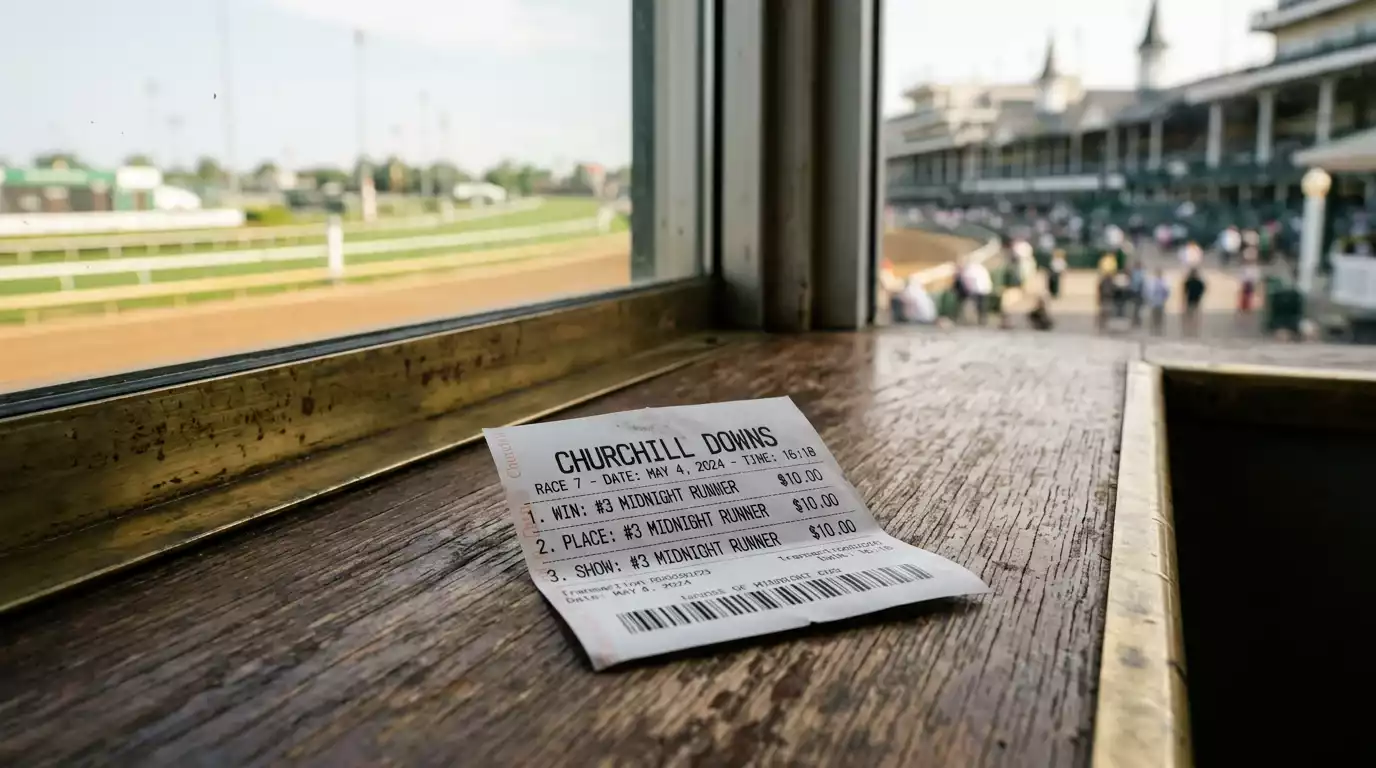
One Horse, Three Bets, Triple the Stake
The first time I tried to explain across-the-board betting to a UK punter, he looked at me as though I had suggested ordering three pints when you only wanted one. “Why would you split your money three ways on the same horse?” he asked. It is a fair question, and after nine years of studying place-market mechanics on both sides of the Atlantic, I still think it is the right one.
An across-the-board bet is a North American construct. You pick one horse and place three simultaneous wagers: win, place, and show. Each goes into its respective pari-mutuel pool. A £2 across-the-board ticket costs £6 — triple the base stake — and the return depends on where the horse finishes. First place triggers a payout from all three pools. Second triggers place and show. Third triggers show only. Anything worse, you lose the lot.
The structure sounds comprehensive, but the cost is the trap. That triple outlay means you need the combined returns from two or three pools to justify the expenditure, and more often than not, the maths does not cooperate. The pari-mutuel system, where roughly 5% of UK horse racing wagering occurs but which drives nearly all US wagering per Gambling Commission figures, determines every pound of return here — and pools do not care about your feelings of security.
How an Across-the-Board Bet Is Structured and Settled
Picture a £2 across-the-board wager on horse number 7 in a ten-runner race. You are actually holding three tickets: £2 win, £2 place, £2 show. Settlement depends entirely on finishing position.
If number 7 wins, the track settles your win ticket from the win pool, your place ticket from the place pool, and your show ticket from the show pool. Three separate calculations, three separate payouts. Say the win pool returns £14.20, the place returns £6.40, and the show returns £3.80 — your total collection is £24.40 against a £6.00 outlay. That looks generous, but notice what happens if number 7 finishes second: you lose the £2 win bet entirely. The place returns £6.40 and the show returns £3.80, totalling £10.20 against your £6.00 stake. Still profitable, but the win portion — which carried the highest potential return — is gone.
Now the painful scenario: number 7 finishes third. You collect only the show payout of £3.80 on your £6.00 investment. You have backed the right horse for a top-three finish and still lost £2.20. This is the structural flaw that critics highlight again and again. The show portion, which is meant to be the safety net, often cannot cover the combined cost of all three tickets.
The Case Against Across the Board: Maths, Margins, and Better Alternatives
Simon Clare, Entain’s PR Director, once pointed out that racing needs big names to draw casual interest — and across-the-board is precisely the kind of bet that casual bettors gravitate towards during marquee events. The problem is that casual appeal and mathematical sense rarely occupy the same ticket. Entain’s own data showed that 82% of cash wagers on the Grand National are five pounds or less, which tells you that most people betting on the sport’s biggest day are spending modestly. Tripling that modest stake on an across-the-board format eats into an already small budget.
The core issue is return compression. In a pari-mutuel system, the show pool is the shallowest of the three because it pays the most tickets. Three horses split the proceeds, which flattens payouts across the board — pun intended. On a favourite, the show return might barely exceed the base stake. On a longshot, the show payout can be surprisingly decent, but the win probability is low enough that you are likely collecting only the show return on the rare occasions the horse finishes in the frame.
A win-only bet puts your entire £6 into the pool with the highest potential return. If the horse loses, you lose more aggressively — but if it wins, the payout dwarfs the across-the-board total. Alternatively, a show-only bet at £6 gives you a larger position in the show pool on a horse you believe will finish in the top three, with a proportionally larger return. The across-the-board ticket, by contrast, spreads your money thin without concentrating risk where the value actually sits.
For UK punters, the equivalent dilemma plays out differently. Each-way betting splits your stake into two parts — win and place — not three, and the place portion covers more finishing positions than a US place or show bet depending on the field. The maths is different, the market structure is different, and the vocabulary is different, but the strategic question is identical: does splitting your money across outcomes improve your expected value, or does it just make you feel safer?
What UK Punters Use Instead: Each-Way and Place-Only Bets
British racing never developed a three-tier system because it did not need one. Fixed-odds bookmakers offer place terms that scale with the field — two places in small fields, three in most races, four in large handicaps — and each-way betting bundles win and place into a single two-part stake. The flexibility of UK place terms effectively absorbs the function that show bets serve in the US.
If you find yourself tempted by the across-the-board concept, the closest UK equivalent is an each-way bet on a large-field handicap where four places are paid. Your stake covers a win wager and a place wager, and because place terms in a 16-runner handicap often pay at 1/4 odds for the top four finishers, the safety-net function is similar to — arguably better than — a US show bet. The difference is that you are not tripling your outlay, and the win, place, show structure that American bettors navigate does not apply.
Place-only bets in the UK offer another alternative. If your conviction is that a horse will finish in the frame but probably will not win, a standalone place bet at fixed odds puts your entire stake behind that view. No win portion diluting the return, no triple-stake cost eating into your profit margin. It is a cleaner expression of the same idea that across-the-board tries to serve.
Across the Board Questions Answered
Is an across-the-board bet available at UK bookmakers?
No. Across-the-board is a North American pari-mutuel product that requires separate win, place, and show pools. UK bookmakers operate on fixed odds and do not offer a three-tier pool structure. The closest equivalent is an each-way bet, which covers win and place in a two-part stake.
How much does an across-the-board bet cost compared to a single win bet?
An across-the-board bet costs exactly three times the base stake because it places three separate wagers — win, place, and show — on the same horse. A £2 across-the-board ticket costs £6, while a £2 win bet costs £2.
Does across the board make sense for a heavy favourite?
Rarely. A heavy favourite’s show payout is often barely above the base stake, so the show portion of the across-the-board ticket contributes almost nothing to total returns. If you are confident the favourite will win, a straight win bet concentrates your money in the pool with the highest return potential.
The full picture is in our guide to UK place and each-way betting.
The British equivalent compared: show bet vs place bet.
Prepared by the Horse Racing Show bet editorial staff.