Dead Heat Rules and Each-Way Bets: How Shared Finishing Positions Affect Your Payout
Best Horse Racing Betting Sites – Bet on Horse Racing in 2026
 Available in US
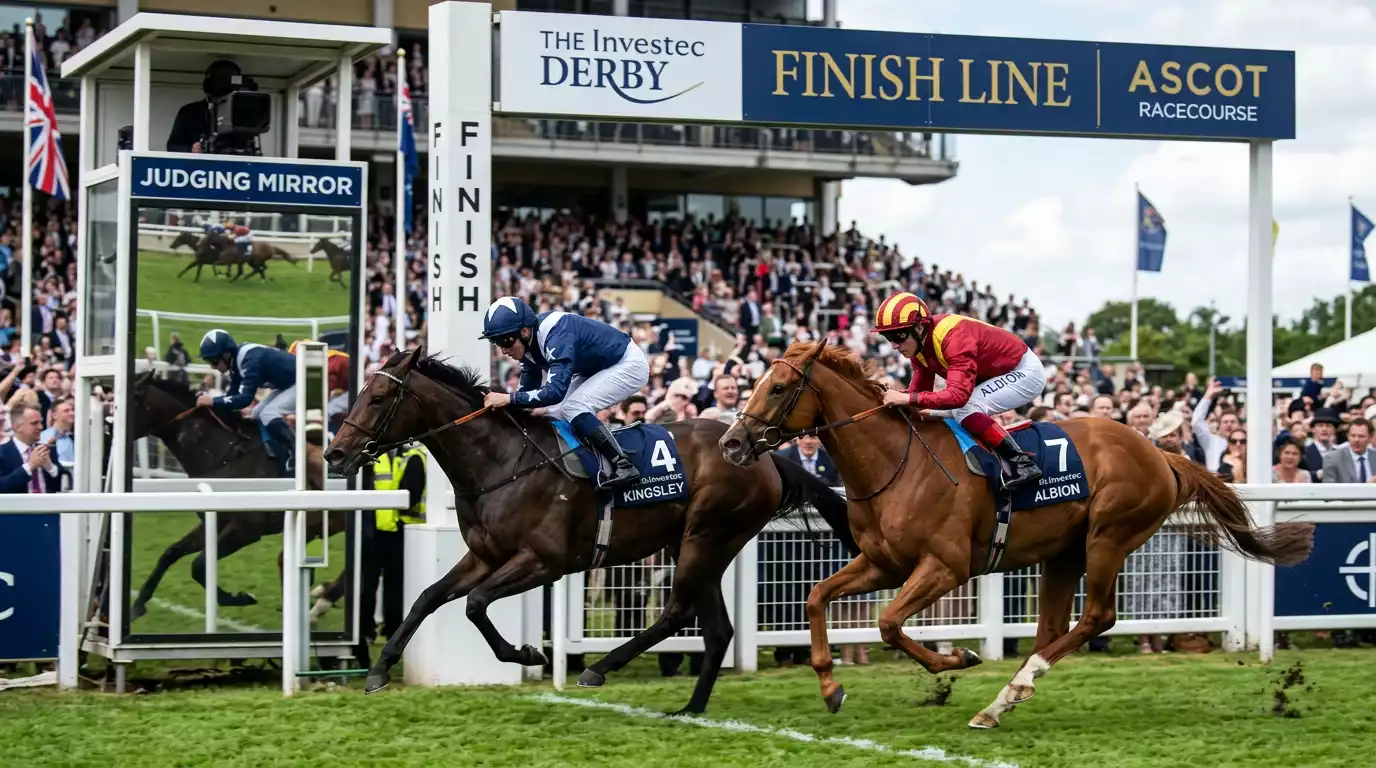
Table of Contents
Two Horses, One Place, Half Your Money
The first dead heat I ever had money on was at Goodwood — a two-mile handicap where my each-way selection dead-heated for third in a race paying three places. I was expecting my place payout. What I actually received was half of it. The settlement slip showed a dead-heat reduction applied to the place portion, and my neatly calculated return was sliced in two. It felt wrong until I understood the logic, and now I think it is one of the fairest rules in the sport.
A dead heat occurs when two or more horses cannot be separated by the judge and are given the same finishing position. In British racing, dead heats are relatively rare for first place but noticeably more common for the minor placings that determine each-way settlements. Remote horse racing betting in Britain generated a gross gambling yield of 766.7 million pounds in the year to March 2025, per the UK Gambling Commission, and a meaningful slice of that total involves each-way bets where dead-heat rules govern the final payout.
The Dead-Heat Rule in Plain Arithmetic
The principle is straightforward: your stake is divided by the number of horses sharing the position, and the return is calculated on that reduced stake. If two horses dead-heat, you effectively have half a bet. If three dead-heat — vanishingly rare, but it happens — you have a third of a bet.
Take an example. You back a horse at 8/1 each-way, five pounds on each part, in a ten-runner race with three places at 1/4 odds. Your horse dead-heats for third with one other runner. The win part is lost because the horse did not finish first. The place part is subject to the dead-heat rule.
Normal place calculation: place odds are 8/4 = 2/1. Return would be (5 x 2) + 5 = 15 pounds. With a two-horse dead heat for third, the stake is halved to 2.50 pounds. Dead-heat return: (2.50 x 2) + 2.50 = 7.50 pounds. The remaining 2.50 pounds of the original place stake is lost. Your total return from a ten-pound outlay is 7.50 — a loss, where a clear third-place finish would have returned 15.
That halving feels punitive, but the logic is sound. Two horses occupy a single place slot, and the bookmaker’s liability was priced for one horse in that position. If both backers received the full payout, the bookmaker would be paying out on a probability that effectively doubled. The dead-heat rule splits the difference.
Dead Heats for Different Positions: Win, Second, Third
Where the dead heat occurs in the finishing order determines which part of your each-way bet is affected — and in some cases, both parts take a hit.
A dead heat for first is the most dramatic scenario. If your horse dead-heats for the win, the win portion of your each-way bet is halved. The place portion, however, depends on whether the dead heat pushes more horses into the places than the race terms allow. In most cases, a dead heat for first means both horses are deemed to have placed, and the place part pays in full because the winning horses fill place positions without exceeding the limit. But if the dead heat for first creates an overflow — say, a race paying two places where two horses dead-heat for second — the place part is also subject to dead-heat reduction.
A dead heat for second in a three-place race works similarly. Your horse has placed, but it shares the second position. If two horses dead-heat for second, both are paid as placed horses with a dead-heat reduction on the place payout. If three horses dead-heat for second, each receives a third of the place payout.
The messiest situation arises when the dead heat falls on the boundary of the places. Two horses dead-heating for the last available place position — third in a three-place race, fourth in a four-place handicap — trigger a half-payout on the place part for both horses. Everyone whose horse finished clearly in the frame above the dead heat receives the full place payout; only the dead-heating horses at the boundary are affected.
Dead Heats and Extra Places: A Double Layer of Complexity
When a bookmaker offers extra places on a race, the dead-heat interaction becomes even more layered. Roughly 75% of all bets on the Grand National are each-way, per grandnational.org.uk data, and extra-place promotions on that race are common. If you have an extra-place bet and your horse dead-heats for the last extended position, the dead-heat rule applies to the enhanced terms, not the standard terms.
Consider a race where standard terms pay four places and the bookmaker extends to five. Two horses dead-heat for fifth. Under the extra-place offer, both horses are in the last qualifying position. The dead-heat rule halves the place payout for both. Under standard terms, neither horse would have placed at all — so the extra-place offer still delivers value, just half the value you expected.
I find this interaction fascinating because it means the extra-place promotion does not shield you from dead-heat reductions. The enhancement widens the net; the dead-heat rule determines how much of the catch you keep. Punters who target extra-place promotions should factor dead-heat risk into their expected value calculations, particularly in big-field handicaps where bunched finishes are more common.
Reducing Dead-Heat Exposure in Your Each-Way Portfolio
You cannot predict a dead heat. The judge’s call is the judge’s call. But you can recognise the conditions that make dead heats more likely and adjust your approach.
Flat racing — particularly sprints over five and six furlongs — produces more dead heats than jumps racing because the margins are tighter at higher speeds. A two-mile chase over fences rarely ends in a dead heat; a five-furlong dash at Ascot does so more frequently. If your each-way portfolio is weighted toward sprint handicaps, your long-term dead-heat exposure is higher.
Large fields also increase the probability of a dead heat for a place position. Favourites in British racing win roughly 30-35% of the time, per Matchbook Insights analysis, but the mid-field of a twenty-runner handicap is a compressed scrum where half-length margins decide who finishes fourth and who finishes fifth. The more runners contesting the minor positions, the greater the likelihood that two cannot be separated.
Exchange place markets offer a structural alternative. On most exchanges, dead heats are settled differently — the exchange voids the portion of matched bets equivalent to the dead-heat reduction, which can produce a slightly different financial outcome depending on whether you were backing or laying. If dead-heat settlements are a persistent drag on your each-way returns at fixed odds, comparing the exchange settlement method is worth the effort.
Top online casinos in the UK
- WinBeastBonus: €5000 + 500 FS + €650 Freebet · Payout speed: 1-3 business days
- NightWinBonus: £900 + 400 free spins · Payout speed: 1-3 business days
- ZombillionBonus: Welcome Pack 250% up to £4000 + 200 FS · Payout speed: 1-3 business days
- AmunbetBonus: Join now and get 450% up to 2,700 GBP + 450 FS · Payout speed: 1-3 business days
- JetsetspinsBonus: 200% Bonus + 100 Free Spins + Free Royal Wheel · Payout speed: 1-3 business days
- BritsinoBonus: Welcome Package – Get your £2,200 + 2,000 FS · Payout speed: 1-3 business days
Dead Heat Questions Answered
Does a dead heat affect both parts of my each-way bet?
Not always. If the dead heat is for first place, the win part is halved but the place part usually pays in full because both horses qualify for a place. If the dead heat is on the boundary of the places — for example, two horses sharing third in a three-place race — only the place part is affected. The specific impact depends on which finishing position the dead heat occurs in.
How are dead heats settled on Tote pool bets?
Tote pool bets treat dead heats differently from fixed-odds bets. The pool dividend is calculated based on the total number of qualifying outcomes. If two horses dead-heat for a place, both sets of backers receive a dividend from the place pool, but the pool is shared more widely, which naturally reduces the per-ticket return. The Tote does not halve your stake in the same mechanical way a fixed-odds bookmaker does.
Can a dead heat occur between more than two horses?
Yes, though it is extremely rare. Three or more horses can share a finishing position if the judge cannot separate them. In that case, the dead-heat rule divides your stake by the number of horses sharing the position. A three-way dead heat reduces your effective stake to one third of the original amount.
The full picture is in our guide to UK place and each-way betting.
The other settlement rule to know: Rule 4 deductions.
Published by the Horse Racing Show bet team.