Show Bet Payout Calculator: How US Pari-Mutuel Pools Determine What You Win
Best Horse Racing Betting Sites – Bet on Horse Racing in 2026
 Available in US
Your Show Payout Depends on Everyone Else’s Money
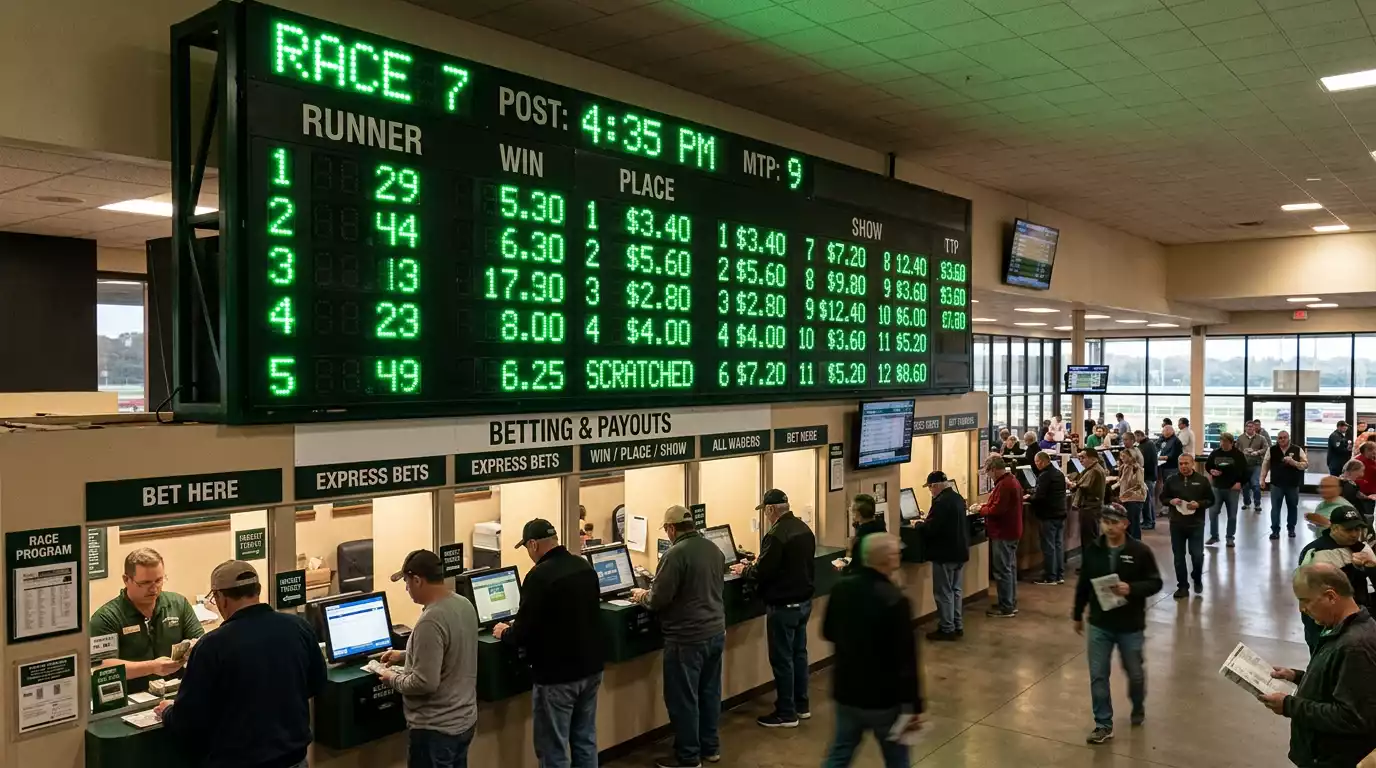
The first time I calculated a show payout from scratch, it felt backwards. In UK fixed-odds betting, the price is agreed before the race — you know exactly what you stand to win. In a North American show pool, you know nothing until the race is over and the final pool figures are published. Your return depends on how many other people backed the same horses, how much money sits in the pool, and what percentage the track takes as its cut. It is communal maths, not personal negotiation.
Pari-mutuel wagering dominates the American racing landscape but accounts for only around 5% of UK horse racing turnover, per Gambling Commission data. That structural difference means most British punters have never encountered show-pool mechanics — and when they search for “show bet payout calculator,” they often expect a fixed-odds tool that does not exist in this context. The calculation is fundamentally different from anything you would use on a UK place bet, and understanding why requires working through the pool from the inside out.
Inside the Show Pool: Total Wagered, Takeout, and Division
A show pool collects every pound wagered on every horse to show — that is, to finish in the top three. Before any payouts are made, the track deducts its takeout. This percentage varies by state and track but typically falls between 15% and 25% on show pools, with many tracks sitting around the 19% mark. The remainder is the net pool — the money available for distribution.
When the race finishes, three horses qualify for show payouts: first, second, and third. The net pool is divided into three equal portions, one for each qualifying position. Each portion is then divided among the total pounds wagered on that particular horse. The result is a per-pound payout figure, which the track rounds down to the nearest 10p (on a £2 base bet).
Here is the critical insight: unlike fixed odds, where the bookmaker absorbs the risk, a pari-mutuel pool distributes all risk among bettors. If an overwhelming favourite finishes in the top three, and most of the pool’s money sits on that favourite, the per-pound return for the favourite’s backers shrinks towards the minimum. The track guarantees a minimum payout — usually £2.10 or £2.20 on a £2 bet — but beyond that floor, the market decides everything.
Step-by-Step Show Payout Calculation With Real Numbers
Let me walk through a concrete example. Suppose a ten-runner race has a total show pool of £100,000. The track’s takeout on show wagers is 19%, leaving a net pool of £81,000. Three horses finish in the top three: horse A (first), horse B (second), horse C (third).
Step one: divide the net pool into three equal shares. £81,000 / 3 = £27,000 per qualifying position.
Step two: for each qualifying horse, subtract the total amount wagered on that horse from its £27,000 share. This gives the profit portion. Suppose £15,000 was wagered on horse A to show, £8,000 on horse B, and £4,000 on horse C. Horse A’s profit portion: £27,000 – £15,000 = £12,000. Horse B’s: £27,000 – £8,000 = £19,000. Horse C’s: £27,000 – £4,000 = £23,000.
Step three: divide each profit portion by the total wagered on that horse. Horse A: £12,000 / £15,000 = £0.80 profit per £1 wagered. Horse B: £19,000 / £8,000 = £2.375 profit per £1 wagered. Horse C: £23,000 / £4,000 = £5.75 profit per £1 wagered.
Step four: convert to a £2 base payout. Horse A: (£0.80 x 2) + £2 = £3.60. Horse B: (£2.375 x 2) + £2 = £6.75, rounded down to £6.70. Horse C: (£5.75 x 2) + £2 = £13.50.
Entain’s data from the Grand National showed that 82% of cash wagers on the race are five pounds or less. Apply that same pattern to a US show pool and you see why the calculation matters: modest stakes amplified across thousands of bettors create pools where the division of spoils is genuinely unpredictable until the final numbers are published. Horse C — the lightly-backed outsider — returned nearly four times the show payout of the well-backed horse A, despite finishing behind it.
Top online casinos in the UK
- WinBeastBonus: €5000 + 500 FS + €650 Freebet · Payout speed: 1-3 business days
- NightWinBonus: £900 + 400 free spins · Payout speed: 1-3 business days
- ZombillionBonus: Welcome Pack 250% up to £4000 + 200 FS · Payout speed: 1-3 business days
- AmunbetBonus: Join now and get 450% up to 2,700 GBP + 450 FS · Payout speed: 1-3 business days
- JetsetspinsBonus: 200% Bonus + 100 Free Spins + Free Royal Wheel · Payout speed: 1-3 business days
- BritsinoBonus: Welcome Package – Get your £2,200 + 2,000 FS · Payout speed: 1-3 business days
Why This Calculation Does Not Apply in UK Fixed-Odds Markets
Simon Clare of Entain once observed that racing needs big names to draw interest, and the structure of the betting market shapes how that interest is monetised. In the UK, when you back a horse to place at 3/1, you know your return before the race. The bookmaker absorbs the risk: if every punter in the country backs the same horse to place, the bookmaker pays everyone at the agreed price out of its own margin. There is no pool to divide, no communal pot, no dependency on other bettors’ behaviour.
The fixed-odds system also gives the bettor a clear decision point: you see the price, assess whether it represents value, and either take it or walk away. There is no guesswork about what the final return might be, no dependency on the betting behaviour of thousands of strangers.
This means a UK place bet payout is entirely deterministic. The only variables are the odds you took and the place terms in force. A show bet payout is entirely probabilistic — you are guessing at a return that depends on collective wagering patterns you cannot observe until the pool closes. For punters used to fixed-odds markets, this uncertainty is disorienting, and it is the primary reason that pari-mutuel show betting never gained traction in Britain. The comparison between the two systems highlights just how different the underlying mechanics are, even when the surface question — “will this horse finish near the front?” — is the same.
Show Payout Questions Answered
What is the typical takeout rate on a US show pool?
Takeout on show pools varies by state and track but generally falls between 15% and 25%. Many major tracks apply a takeout of around 19% on show wagers. This is typically higher than the takeout on win pools at the same track, which is one reason professional US horseplayers tend to concentrate their money on win bets rather than show bets.
Is there a minimum show payout guaranteed by the track?
Yes. US tracks guarantee a minimum show payout, usually £2.10 or £2.20 on a standard £2 bet, regardless of how the pool divides. If the calculated payout would fall below the minimum — which can happen when a very heavy favourite finishes in the top three — the track absorbs the shortfall. This is called a minus pool and it costs the track money.
The full picture is in our guide to UK place and each-way betting.
How the pools work: pari-mutuel vs fixed odds.
Prepared by the Horse Racing Show bet editorial staff.