Pari-Mutuel vs Fixed-Odds Place Betting: Two Systems, Two Different Sets of Risk
Best Horse Racing Betting Sites – Bet on Horse Racing in 2026
 Available in US
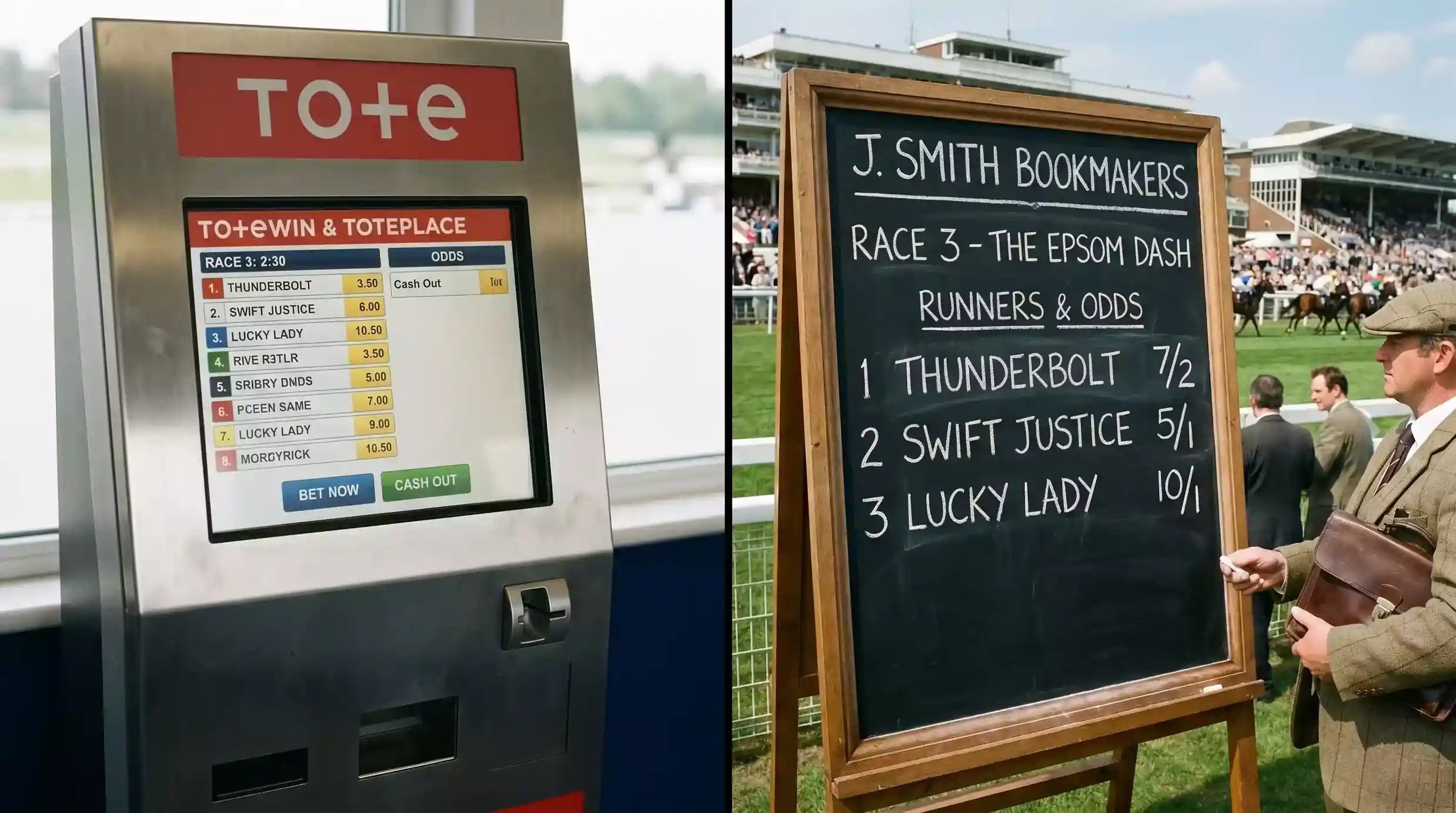
Table of Contents
The Price You See and the Price You Get
Years ago at Sandown, I backed a horse place-only with a fixed-odds bookmaker at 5/2 and simultaneously put the same amount into the Tote place pool on the same horse. Both bets won. The bookmaker paid me 5/2, exactly what I expected. The Tote paid 4.70 to a one-pound stake — the equivalent of 3.7/1. I had beaten the bookmaker’s price by over a point simply by using a different system. That experience, more than any textbook explanation, taught me that the place-betting infrastructure you choose can be as important as the horse you choose.
Pari-mutuel and fixed-odds are the two fundamental pricing mechanisms in horse racing, and they handle place bets in profoundly different ways. Understanding those differences — when each system favours the bettor, when each favours the house — is essential knowledge for anyone serious about place or each-way betting.
How Fixed-Odds Place Pricing Works
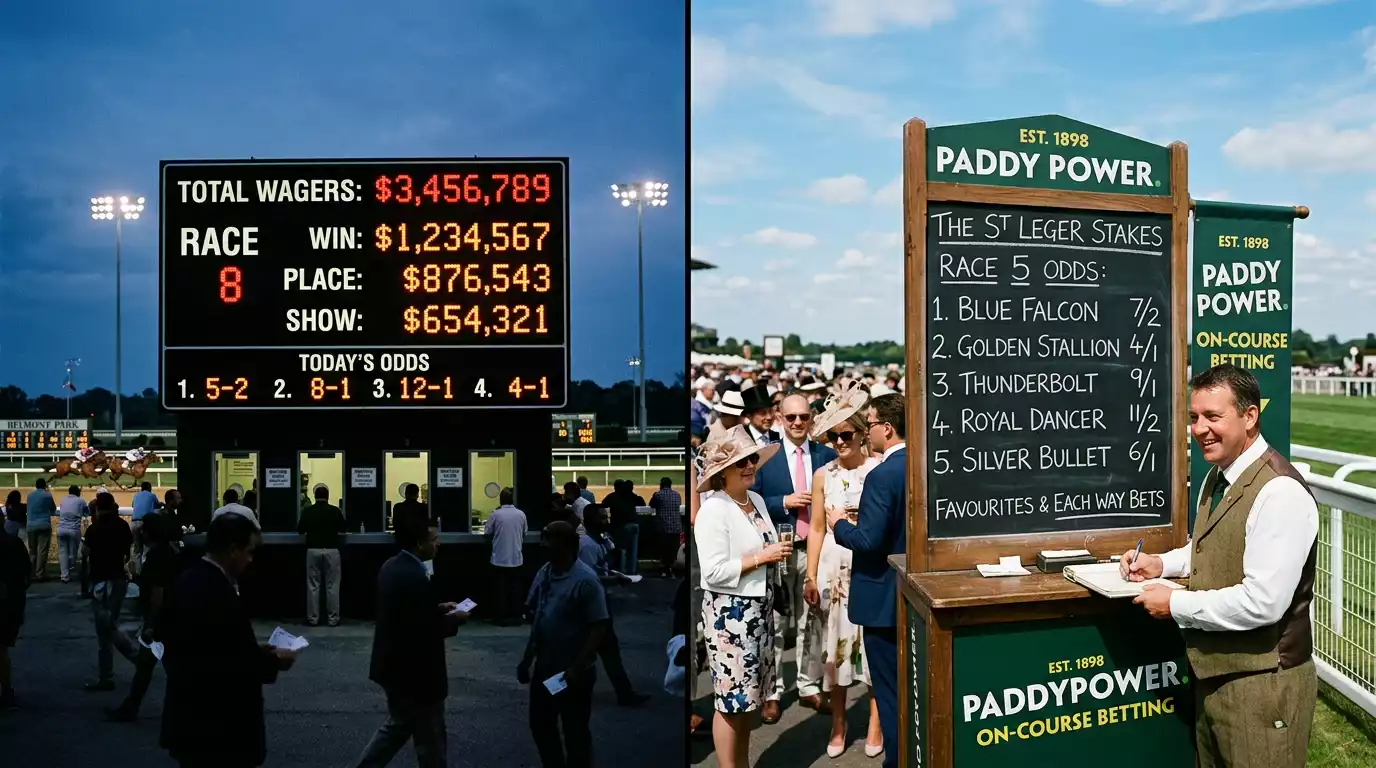
In fixed-odds betting, the bookmaker sets a price for each horse to win. The place odds are derived from the win price using a fraction — 1/4 or 1/5 depending on field size and the number of places paid. When you take the price, it is locked in. If you back a horse at 12/1 each way and the starting price drifts to 16/1, your bet is still settled at 12/1. If the price contracts to 8/1, your bet is still settled at 12/1. The certainty of the price at the moment of betting is the defining feature of fixed odds.
The bookmaker’s margin is embedded in the odds themselves. The overround on the win market flows through to the place market via the fractional derivation, and additional rounding typically inflates the margin further. Matchbook Insights data shows favourites win 30-35% of the time, and bookmakers price those favourites tightly to attract volume. The extra margin gets loaded onto longer-priced runners, where place bettors often operate.
Best-odds-guaranteed promotions partially offset this by paying the starting price if it is higher than the price you took. But BOG applies to the win price, and the place portion is derived from whichever price triggers the guarantee. If you take 10/1 early and the horse starts at 14/1, your place return is calculated at 14/4 = 3.5/1 under BOG at 1/4 terms, rather than the 10/4 = 2.5/1 you originally locked in. This makes BOG doubly valuable for each-way bettors.
How Pari-Mutuel Place Pools Operate
In pari-mutuel betting — the Tote system in the UK — there are no fixed odds. All place bets go into a single pool. The operator takes a percentage deduction (the takeout) and the remaining pool is divided among winning bettors in proportion to the amount they staked on each placed horse. The final payout is not known until betting closes and the result is declared.
The UK Gambling Commission reports that pari-mutuel wagering accounts for roughly 5% of total UK horse racing betting. The Tote’s place pool is a separate entity from its win pool. You can bet into the place pool directly, without attaching a win bet, and the pool’s size and the distribution of money across runners determine your return.
The Tote’s takeout on the place pool is typically around 24-26%, which sounds high — and it is, relative to the best fixed-odds margins. But the actual payout to a winning bettor depends on how much money was wagered on their horse versus the total pool. If a placed horse attracted very little pool money — perhaps because it was unfashionable or its form was obscure — the pari-mutuel return can substantially exceed the fixed-odds equivalent. Conversely, if a placed horse was heavily backed in the pool, the return can fall below fixed odds.
When Pari-Mutuel Outpays Fixed Odds on the Place
The pari-mutuel system rewards contrarian betting. When you back a horse that the rest of the pool has ignored, your share of the winning pool is disproportionately large. This happens most often with unfancied runners in large-field handicaps — horses priced at 14/1 or longer with the bookmakers who attract minimal Tote pool money.
At the major festivals, pool sizes are substantial. Approximately 250 million pounds was wagered on the 2025 Grand National, per grandnational.fans, and a significant fraction of that passed through Tote pools. In races with deep pools, the pari-mutuel system can offer genuine place value on overlooked runners because the large pool size means your dividend is not diluted by a few other shrewd punters backing the same horse.
The opposite dynamic hurts: heavily backed horses in the place pool pay less than their fixed-odds equivalent. A short-priced favourite that attracts 40% of the place pool money but only occupies one of three or four places will pay a poor dividend. In this scenario, the fixed-odds each-way bet at an early price is materially better because the price was set before the weight of public money compressed the pool returns.
Practical Comparison: Which System to Use When
The decision between pari-mutuel and fixed odds for place betting comes down to market position and timing. Early in the betting cycle — the morning of the race, or the evening before for popular events — fixed-odds bookmakers are offering prices that may not yet reflect the final weight of money. Taking an early fixed price, especially with best-odds-guaranteed protection, locks in value that may evaporate as the market moves.
Later in the betting cycle — near the off — the fixed-odds market has typically contracted as bookmakers manage their liabilities. At this point, the Tote place pool may offer better value on horses that have drifted in the fixed-odds market because the pool has not adjusted as aggressively. Checking the indicative Tote dividends displayed before the off gives a rough guide, though the final payout will differ once late money is processed.
For horses that you expect to be popular with the public — well-known names, trainers with strong media profiles, horses that ran well last time on television — the Tote place pool will be compressed and fixed odds are almost certainly better. For overlooked runners whose merits you have identified through your own form study, the Tote pool may offer a payout premium that fixed odds cannot match.
Structural Advantages and Limitations of Each System
Fixed odds offer certainty. You know your return the moment you place the bet. You can shop between bookmakers for the best place price. You can combine fixed-odds place bets with exchange trading to hedge or green up. The infrastructure supports complex strategies and multi-leg bets like each-way doubles and patents.
Pari-mutuel offers potential upside on contrarian selections but removes certainty. You cannot calculate your exact return in advance. You cannot shop between pool operators because the Tote runs a single pool per race. Multi-leg pari-mutuel bets — the Tote Placepot, for instance — are separate products with their own pool dynamics and takeout rates. The lack of price certainty makes bankroll management harder because your actual return per winning bet varies unpredictably.
Prize money across British racing rose 3.5% to a record 194.7 million pounds in 2025, per Kevin Walsh of the Racecourse Association. That growth keeps field sizes healthy at major meetings, which sustains both deep Tote pools and competitive fixed-odds markets. In a thriving racing economy, both systems offer viable place-betting routes. In leaner times, when field sizes shrink and pools thin out, fixed odds become more reliable because the bookmaker’s price is not dependent on the volume of other bettors’ money.
Choosing the Right Tool for the Right Race
Most serious place bettors use both systems. Fixed odds with BOG form the backbone — reliable, shoppable, and price-certain. Tote pools supplement the strategy on specific races where an unfancied selection’s low pool share signals a potential dividend premium. Checking both systems before every bet adds a minute to your process and can add percentage points to your return. The two systems are not rivals. They are tools, and the smartest punters use whichever tool fits the race at hand.
Does the Tote always pay more than bookmakers on place bets?
No. The Tote pays more when a placed horse attracted relatively little pool money, which happens with unfancied runners. When a placed horse was heavily backed in the pool, the Tote dividend is often lower than fixed-odds place prices. Comparing indicative Tote dividends with bookmaker prices before the off helps you choose the better option for each race.
What is the Tote’s takeout on the place pool?
The Tote’s deduction from the place pool is typically around 24-26% of the total pool. This is higher than the effective margin on competitive fixed-odds place markets, but the actual payout to individual bettors varies because it depends on how the pool money was distributed across placed horses.
Can I combine pari-mutuel and fixed-odds place bets?
Yes, but they are separate bets with separate settlement. You could back a horse place-only with a bookmaker at fixed odds and simultaneously place a Tote place pool bet on the same horse. The two bets settle independently — the bookmaker pays the agreed price and the Tote pays the pool dividend. This approach can capture value from both systems when the prices diverge.
The full picture is in our guide to UK place and each-way betting.
The British pool in practice: Tote pool betting.
Prepared by the Horse Racing Show bet editorial staff.