Cashing Out Each-Way Bets: When to Lock In a Profit and When to Let It Run
Best Horse Racing Betting Sites – Bet on Horse Racing in 2026
 Available in US
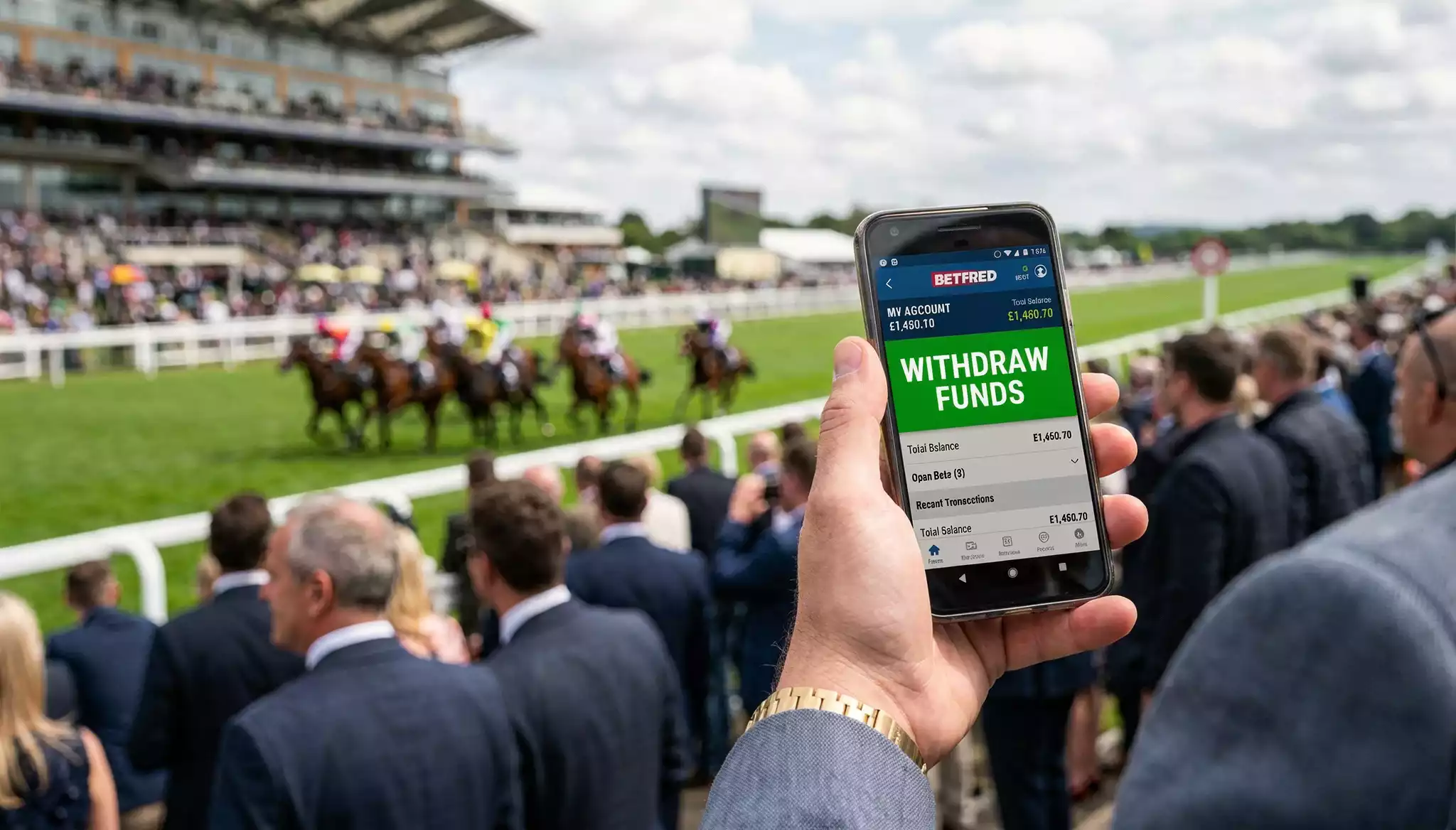
Table of Contents
- The Button That Tempts Every Each-Way Bettor
- How Cash Out Is Calculated on Each-Way Bets
- Top online casinos in the UK
- Partial Cash Out: Splitting the Difference on Your Each-Way Bet
- When Cashing Out Costs You Money: the Expected Value Test
- Cash Out and Each-Way Multiples: Compounding Complexity
- Cash Out Each-Way Questions Answered
The Button That Tempts Every Each-Way Bettor
My horse was travelling beautifully at the two-furlong pole of a big Saturday handicap. I had backed it at 12/1 each-way, and my phone was flashing a cash-out offer of eighty-five pounds against a ten-pound outlay. Eighty-five pounds guaranteed, right now, versus the uncertainty of the final two furlongs. I let it run. The horse finished fourth — placed, but the place return was twenty-two pounds. I had turned down eighty-five to collect twenty-two. That is the cash-out dilemma in its purest form, and it taught me that the right answer depends on more than the numbers on the screen.
Cash out is a feature offered by most major UK bookmakers that lets you settle a bet before the event finishes. The bookmaker calculates a real-time offer based on the current odds and the remaining probability of your bet winning or placing. You accept or decline. If you accept, the bet is closed and you receive the offered amount. If you decline, the bet runs to its natural conclusion.
How Cash Out Is Calculated on Each-Way Bets
The cash-out offer on an each-way bet reflects the combined value of both the win and place portions at the current moment. If your horse has shortened from 12/1 to 4/1 during the race, the win portion has increased dramatically in value. The place portion has also risen because the shorter price implies a higher probability of placing. The bookmaker aggregates both, applies a margin, and presents you with a number.
That margin is the critical detail. The cash-out offer is not a fair-value calculation — it is a price at which the bookmaker is willing to buy back your bet. The margin works against you, typically by 5-15% depending on the operator and the timing. If the true value of your each-way position is a hundred pounds, the cash-out offer might be eighty-five or ninety. The bookmaker profits from the gap, which is how cash out generates revenue.
Favourites in British racing win roughly 30-35% of the time, per Matchbook Insights analysis, and cash-out offers on favourites tend to carry tighter margins because the probability is more precisely estimated. On longer-priced horses, the uncertainty is greater and the bookmaker’s margin widens to compensate for the risk of getting the in-running probability wrong.
Top online casinos in the UK
- WinBeastBonus: €5000 + 500 FS + €650 Freebet · Payout speed: 1-3 business days
- NightWinBonus: £900 + 400 free spins · Payout speed: 1-3 business days
- ZombillionBonus: Welcome Pack 250% up to £4000 + 200 FS · Payout speed: 1-3 business days
- AmunbetBonus: Join now and get 450% up to 2,700 GBP + 450 FS · Payout speed: 1-3 business days
- JetsetspinsBonus: 200% Bonus + 100 Free Spins + Free Royal Wheel · Payout speed: 1-3 business days
- BritsinoBonus: Welcome Package – Get your £2,200 + 2,000 FS · Payout speed: 1-3 business days
Partial Cash Out: Splitting the Difference on Your Each-Way Bet
Several operators offer partial cash out, which lets you take a portion of the cash-out value while leaving the remainder of your bet active. This is the feature I find most useful for each-way positions, because it lets you lock in a base return while maintaining exposure to the full payout.
If the cash-out offer on your 12/1 each-way bet is eighty-five pounds, you might take fifty per cent — forty-two pounds — and leave the rest running. If the horse wins, you collect the remaining half of the original each-way return (minus the cashed-out portion) plus the forty-two you already secured. If it fades, you still have forty-two pounds in your pocket against a ten-pound outlay. The partial approach transforms the binary decision into a spectrum: how much certainty do you want to buy, and how much upside are you willing to retain?
The maths of partial cash out is identical to full cash out in terms of the margin. The bookmaker applies the same discount to your position regardless of how much you withdraw. But the psychological benefit is significant. Taking some money off the table reduces the emotional sting if the horse fails to deliver, while keeping skin in the game preserves the excitement and the profit potential.
When Cashing Out Costs You Money: the Expected Value Test
Cash out feels like a rational decision, but it frequently destroys value. Every time you accept a cash-out offer below the expected value of letting the bet run, you are paying the bookmaker to end your position prematurely. The question is whether the certainty of the cash-out amount is worth more to you than the statistical expectation of the unsettled bet.
The remote horse racing GGY of 766.7 million pounds reported by the UK Gambling Commission for the year to March 2025 includes a substantial contribution from cash-out margins. Every cashed-out bet that settles below its true expected value adds to the bookmaker’s yield. Cash out is a product designed to benefit the bookmaker’s bottom line — which does not mean you should never use it, but it does mean you should understand the cost.
The expected value test is simple. Estimate the probability that your horse will win or place from its current position. Multiply each probability by the respective payout. Sum them. If the expected value exceeds the cash-out offer, letting it run is the mathematically correct decision. If the cash-out offer exceeds the expected value — which can happen if the bookmaker’s in-running model overestimates your horse’s chances — cashing out is the sharper move.
In practice, the expected value calculation is difficult to run in real time during a race. Horses change position, the pace fluctuates, and your emotional state clouds the arithmetic. This is why I set cash-out rules before the race starts. My rule: I only cash out an each-way bet if the offered amount exceeds twice my total outlay and the horse is in a position where the race could go wrong — wide on the bend, niggled along early, not jumping fluently. If the horse is travelling well, I let it run regardless of the cash-out figure.
Cash Out and Each-Way Multiples: Compounding Complexity
Cash out on each-way multiples — doubles, trebles, Patents, Lucky 15s — introduces additional layers. The cash-out offer reflects the combined state of all legs, including those already settled and those still running. If one leg of an each-way double has won and the second leg is about to run, the cash-out offer is based on the first leg’s actual result multiplied by the second leg’s current implied probability.
The temptation to cash out after one leg wins is strong. You have a guaranteed profit locked into the first leg, and the each-way double is now riding entirely on the second selection. Cashing out secures a known return. Letting it run risks losing the accumulated profit from leg one if leg two fails to place.
My approach to multiples is to set a cash-out threshold before the first leg runs. If the accumulated value after settled legs exceeds a predetermined multiple of my original outlay — usually five times — I consider a partial cash out to protect the base profit. Below that threshold, I let the bet run because the compounding potential of the remaining legs exceeds the certainty value of the cash-out offer.
Cash Out Each-Way Questions Answered
Can you cash out the place part of an each-way bet separately from the win part?
At most bookmakers, no. The cash-out offer applies to the entire each-way bet as a single position. You cannot separately cash out the win component while leaving the place component active, or vice versa. Some operators may offer this in future, but current standard practice treats the each-way bet as one unit for cash-out purposes.
Does cashing out an each-way bet affect your eligibility for Best Odds Guaranteed?
If you cash out before the race starts, the bet is settled and BOG does not apply because there is no starting price comparison to make. If partial cash out is taken during the race, the remaining portion may still qualify for BOG on the uncashed portion, depending on the operator’s terms. Check the specific bookmaker’s rules before assuming BOG applies to partially cashed-out bets.
The full picture is in our guide to UK place and each-way betting.
Working out what it is worth: the each-way calculator.
Published by the Horse Racing Show bet team.