Exchange Betting Place Markets: How to Back and Lay Place Outcomes on UK Racing
Best Horse Racing Betting Sites – Bet on Horse Racing in 2026
 Available in US
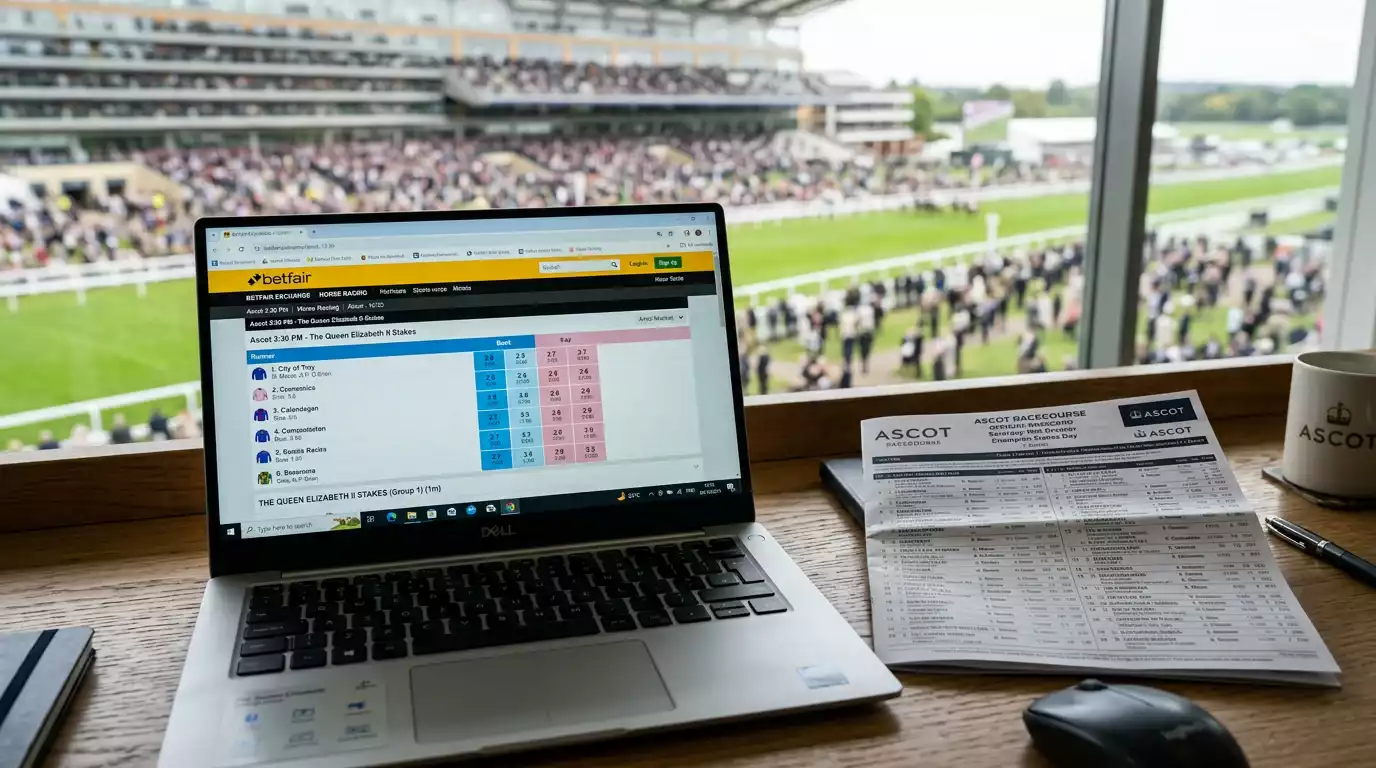
Table of Contents
- Setting Your Own Place Odds: What Exchange Markets Offer That Bookmakers Cannot
- Top online casinos in the UK
- Backing and Laying Place Outcomes: the Mechanics
- Place Market Liquidity: Which Races Attract Enough Money to Trade
- Exchange Place Prices vs Bookmaker Place Odds: When the Exchange Wins
- Exchange Place Market Questions Answered
Setting Your Own Place Odds: What Exchange Markets Offer That Bookmakers Cannot
I started using exchange place markets after a frustrating Saturday at Ascot. I had a strong view that a 10/1 shot would finish in the places but probably would not win, yet the each-way place odds at 1/4 gave me just 2.5/1 on the place portion. The exchange place market was offering 3.8 — a 52% better price on the same outcome. That gap was not an anomaly; it was a structural feature of how exchanges price place events differently from bookmakers.
An exchange is not a bookmaker. It is a marketplace where punters bet against each other. You can back a horse to place (betting it will finish in the places) or lay it (betting it will not). The exchange takes a commission on net winnings — typically between 2% and 5% — rather than building a margin into the odds. This model produces place prices that reflect the collective view of the market’s participants, and those prices frequently diverge from the place odds implied by a bookmaker’s each-way terms.
UK remote horse racing betting generated 766.7 million pounds in gross gambling yield in the year to March 2025, per the UK Gambling Commission. Exchanges capture a slice of that market, and their place offerings give punters access to odds transparency that no traditional bookmaker matches.
Top online casinos in the UK
- WinBeastBonus: €5000 + 500 FS + €650 Freebet · Payout speed: 1-3 business days
- NightWinBonus: £900 + 400 free spins · Payout speed: 1-3 business days
- ZombillionBonus: Welcome Pack 250% up to £4000 + 200 FS · Payout speed: 1-3 business days
- AmunbetBonus: Join now and get 450% up to 2,700 GBP + 450 FS · Payout speed: 1-3 business days
- JetsetspinsBonus: 200% Bonus + 100 Free Spins + Free Royal Wheel · Payout speed: 1-3 business days
- BritsinoBonus: Welcome Package – Get your £2,200 + 2,000 FS · Payout speed: 1-3 business days
Backing and Laying Place Outcomes: the Mechanics
Backing a horse to place on an exchange works exactly like any exchange bet. You request a price and a stake. If another user is willing to lay at that price — or if your request matches an existing offer — the bet is matched. When the race finishes, the exchange settles based on whether the horse finished in the designated places.
Laying a horse to place means you are betting that it will not finish in the frame. You set the odds at which you are willing to offer the bet, and if a backer matches, you take on the liability. If the horse finishes outside the places, you keep the backer’s stake minus commission. If it places, you pay out at the agreed odds.
The lay side is where things get strategically interesting. In a twelve-runner race, if you lay a horse to place at 2.0 (even money in decimal), you are expressing the view that it has less than a 50% chance of finishing in the top three. If you are right more often than not, you profit over time. The maths is identical to any other lay bet, but the higher frequency of place outcomes compared to win outcomes changes the risk profile. Horses place more often than they win, which means lay-to-place positions are triggered more frequently — and your liability is called upon more often. You need a higher strike rate on your lay assessments to maintain profitability.
Place Market Liquidity: Which Races Attract Enough Money to Trade
Liquidity is the practical constraint that determines whether exchange place markets are usable. A market with two hundred pounds matched at your desired price is functionally different from one with fifty thousand pounds matched. In thin markets, your order sits unmatched, or you accept a worse price to get filled.
Industry estimates suggest roughly 250 million pounds was wagered on the 2025 Grand National across all channels, per grandnational.fans data. Exchange place markets on that race carry deep liquidity — you can back or lay at competitive prices with large stakes matched quickly. The HBLB’s Said Delmonte noted that bookmaker gross profits in the early months of 2025 were well above recent norms, particularly around the Cheltenham Festival, and exchange place markets on festival races reflected that high level of activity with tight spreads and deep books.
Outside of major fixtures, liquidity drops sharply. A Tuesday card at Catterick might carry only a few hundred pounds in the exchange place market, which makes meaningful trading difficult. Mid-tier meetings — decent Saturday cards, ITV-televised races, competitive handicaps — occupy the middle ground: enough liquidity to place a bet at a reasonable size, but not enough to absorb large stakes without moving the price.
The practical rule I follow: if the exchange place market has less than a thousand pounds matched at the prices I am interested in, I either wait for the market to develop closer to the off or use fixed-odds instead. Forcing a large bet into a thin market worsens your price and defeats the purpose of using the exchange in the first place.
Exchange Place Prices vs Bookmaker Place Odds: When the Exchange Wins
The comparison is not always straightforward because the two markets price place outcomes differently. A bookmaker’s each-way place odds are derived from the win odds by applying a fraction — 1/4 or 1/5 — which means they are a mathematical by-product of the win price, not an independent assessment of place probability. An exchange place price is set by market participants who are specifically evaluating the likelihood of a top-three (or top-four) finish.
This structural difference creates opportunities. When a horse’s place probability is higher than its win odds imply — a consistent placer priced at 8/1 to win, for example, whose true place chance is better than the 2/1 implied by 1/4 terms — the exchange place market often reflects that reality more accurately than the each-way fraction does. In those cases, the exchange offers a better price.
Conversely, when a horse’s place probability closely tracks its win odds — a front-runner that either wins or fades, with little middle ground — the each-way fraction might offer comparable or even superior value, because the exchange market prices in the bimodal risk pattern. There is no universal answer to “which is better?” The answer depends on the horse’s profile, the race conditions, and the specific prices available at the time of your bet.
For a deeper look at how the Tote’s pari-mutuel model offers yet another angle on place pricing, the Tote pool betting guide covers the mechanics of a system where your return depends entirely on the size and distribution of the pool.
Exchange Place Market Questions Answered
How is the number of places determined on an exchange place market?
Exchanges mirror standard industry place terms. In fields of five to seven runners, two places are paid. Eight to fifteen runners: three places. Handicaps with sixteen or more runners: four places. These terms are set by the exchange and align with the terms used by fixed-odds bookmakers on the same race.
What commission do exchanges charge on winning place bets?
Commission rates vary by exchange and by user. Standard commission is typically between 2% and 5% of net winnings. Some exchanges offer reduced commission rates based on betting volume or loyalty tiers. The commission applies only to net profits — if you lose a bet, no commission is charged on that transaction.
The full picture is in our guide to UK place and each-way betting.
The margin you avoid there: the overround.
Written by the editors at Horse Racing Show bet.